
Shanna is a Formula 1 journalist at GPblog, specializing in both F1 and endurance and GT racing. With a Master’s degree in Journalism and experience at international circuits, she provides in-depth, reliable coverage and insights based on her presence at Grands Prix and racing events worldwide.
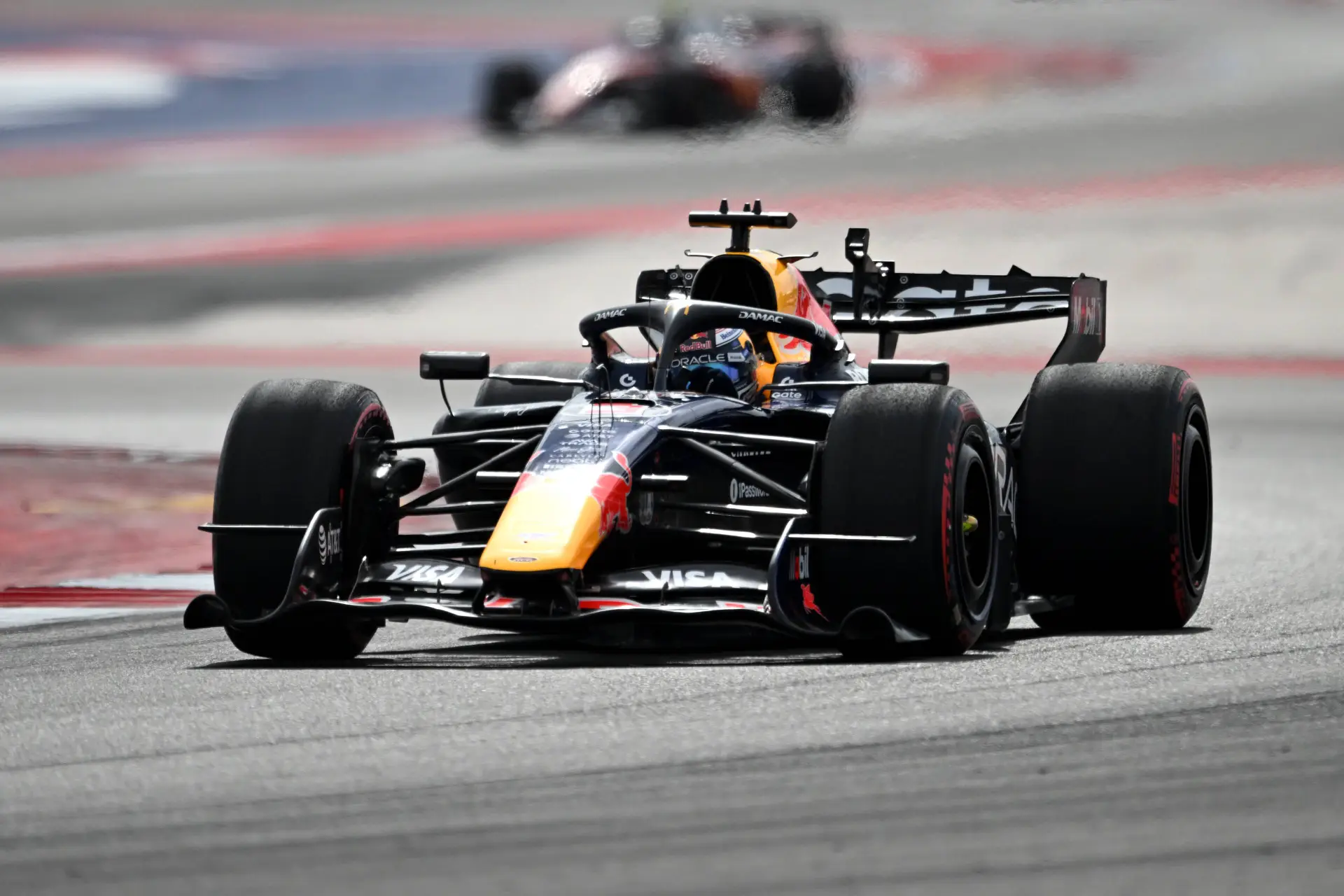
Max Verstappen got little out of his second set of soft tyres in Austin. While Red Bull Racing once again opted for the soft compound, Charles Leclerc was able to stay out longer on mediums before making his final stop. As a result, Verstappen had to begin a final stint of 25 laps early. The stint data shows why the strategy raises questions.
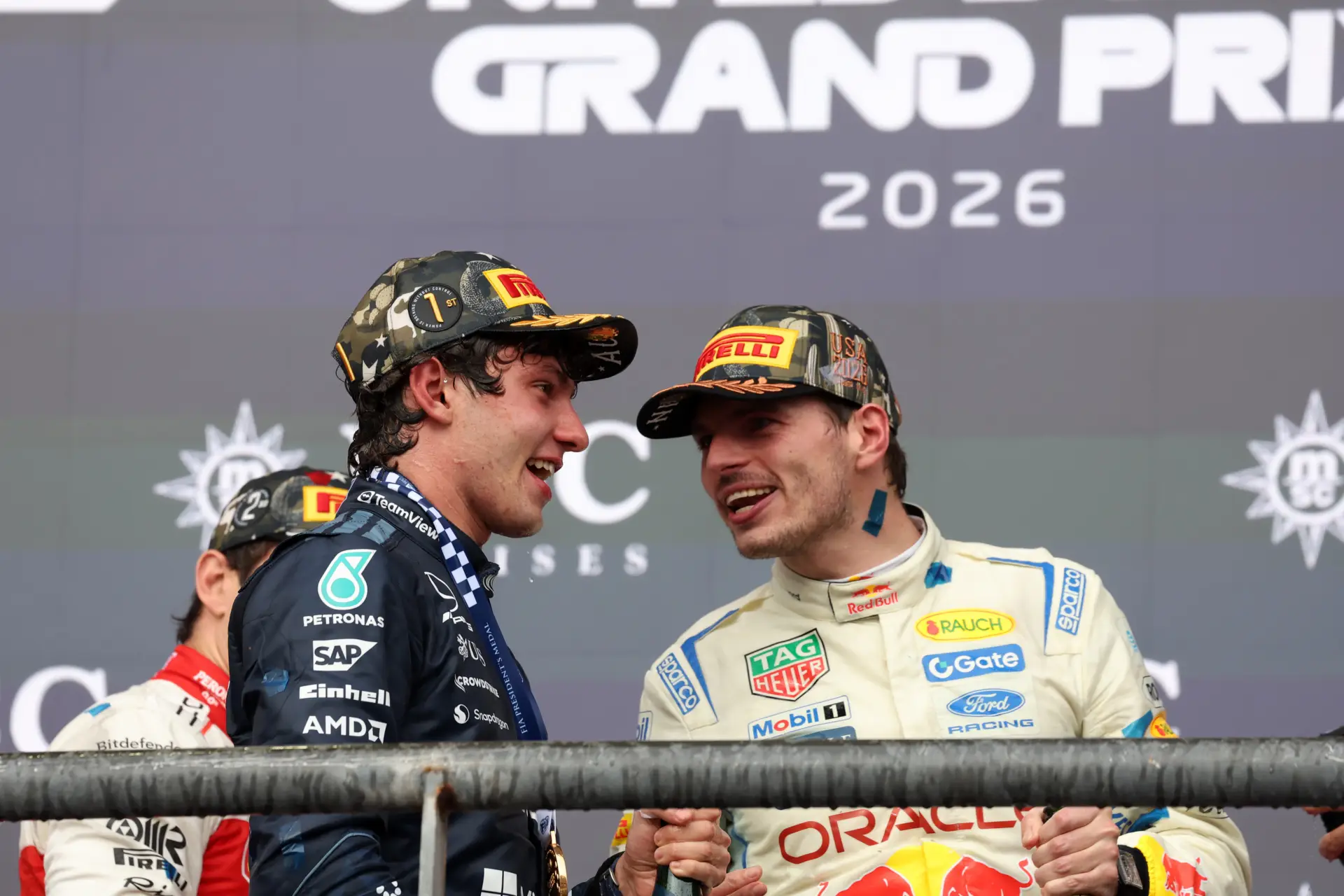
Verstappen finished the United States Grand Prix behind Kimi Antonelli and Leclerc. The three podium finishers each approached the race differently. Antonelli made it to the finish with one tyre change, while Verstappen and Leclerc stopped twice. The tyre choice at their first stops was a key factor in how the rest of the race unfolded.
After thirteen laps, Verstappen swapped his softs for a second set of the same compound. Leclerc extended his opening stint by two laps before switching to mediums. That allowed the Ferrari driver to complete 24 laps on them. Verstappen’s second stint on softs lasted eighteen laps, after which Red Bull brought him in again.
Second set of softs gives Verstappen no clear advantage
Verstappen posted a median lap time of 1:40.483 during his middle stint on soft tyres. Leclerc recorded a 1:40.389 on mediums, making him marginally quicker in that comparison. The 0.094-second gap is small, but Verstappen’s softer compound did not deliver a clear speed advantage. The stints do not overlap completely. Leclerc stayed out longer and completed a greater portion of his stint with less fuel on board. The median, the middle value of all the lap times within a stint, also does not compare the drivers over precisely the same race laps. The difference therefore cannot be attributed directly to the tyres.
ADVERTISEMENT

Median lap times per stint for the Red Bull Racing, McLaren, Mercedes and Ferrari drivers at the United States Grand Prix - Source: GPblog
Red Bull’s choice did affect how Verstappen’s race was divided up. He began his final stint as early as lap 32, while Leclerc only started on his final set of tyres from lap 40. By the time the Monegasque began his final stint, Verstappen had already completed eight racing laps on his mediums. Ferrari was able to cover the remaining seventeen laps on hards. Lewis Hamilton also had a shorter final stint than Verstappen: he switched to the hard compound on lap 39, with eighteen laps still to go.
Ferrari had more pace in reserve for the closing stages
The gap was considerable during those final stints. Leclerc recorded a median of 1:38.604, while Hamilton managed 1:38.758. Verstappen’s median was 1:39.646. That made both Ferrari drivers around nine tenths to a second per lap quicker than the Dutchman in their final stints. Verstappen began his stint earlier in the race, meaning he completed more laps in a heavier car than his Ferrari rivals. The figures therefore do not mean that he lost a second on every lap throughout the entire closing phase. However, he made his final pit stop earlier than his Ferrari rivals, who were able to run on fresher tyres to the finish.
Ferrari’s pace was already apparent before the late virtual safety car. Leclerc set his fastest lap on lap 42, and Hamilton on lap 48. The neutralisation from laps 51 to 53 cannot explain those times. Antonelli presented Red Bull with a different problem. The Mercedes driver completed 24 laps on mediums, followed by 32 on hards. His median lap time during that final stint was 1:39.822, just 0.176 seconds slower than Verstappen’s median on mediums. With his two-stop strategy, Verstappen also had to make up the time lost to an extra pit stop. These figures do not show the pace advantage needed to do so.
ADVERTISEMENT
The fastest stint for each driver, ranked:
| Position | Driver | Fastest stint | Tyre | Median lap time |
| 1 | Charles Leclerc | 3 | Hard | 1:38.604 |
| 2 | Lewis Hamilton | 3 | Hard | 1:38.758 |
| 3 | Max Verstappen | 3 | Medium | 1:39.646 |
| 4 | Kimi Antonelli | 2 | Hard | 1:39.822 |
| 5 | Lando Norris | 2 | Hard | 1:40.155 |
| 6 | Isack Hadjar | 2 | Hard | 1:40.250 |
| 7 | George Russell | 2 | Hard | 1:40.774 |
| 8 | Oscar Piastri | 2 | Hard | 1:40.831 |
What do the figures say about Verstappen’s criticism?
The stint data cannot, unfortunately, prove Verstappen’s claim that Red Bull had not kept to the agreement, as it is unclear what he was referring to. An agreement about having clear air after a pit stop, for instance, would require an analysis of the gaps between cars and the traffic. Establishing whether there was an agreement on tyre choice or pit-stop timing would require access to the plans discussed beforehand and the communications during the race.
The strategy itself, however, provides ample grounds for criticism. Red Bull once again chose softs at the first stop, without that stint delivering a convincing advantage over Leclerc. Verstappen then had to switch to his final set earlier, leaving him with a long stint to the finish.
Isack Hadjar showed that a long stint on the hard tyre was possible within Red Bull. After 25 laps on softs, he completed the remaining 31 laps on hards. Whether Verstappen would have been better off doing the same also depends on the tyre sets available to him and the conditions at the time of the stop. The key question for Red Bull is why it preferred a second stint on softs when Ferrari was able to stay out longer and Mercedes saved itself a full pit stop.
ADVERTISEMENT

Don’t miss GPblog in Google
Mark us as a preferred source and our articles will appear more often at the top of Top Stories.
Add as a preferred / source on Google