F1 Tech | What's behind the new Ferrari SF-26's intriguing design
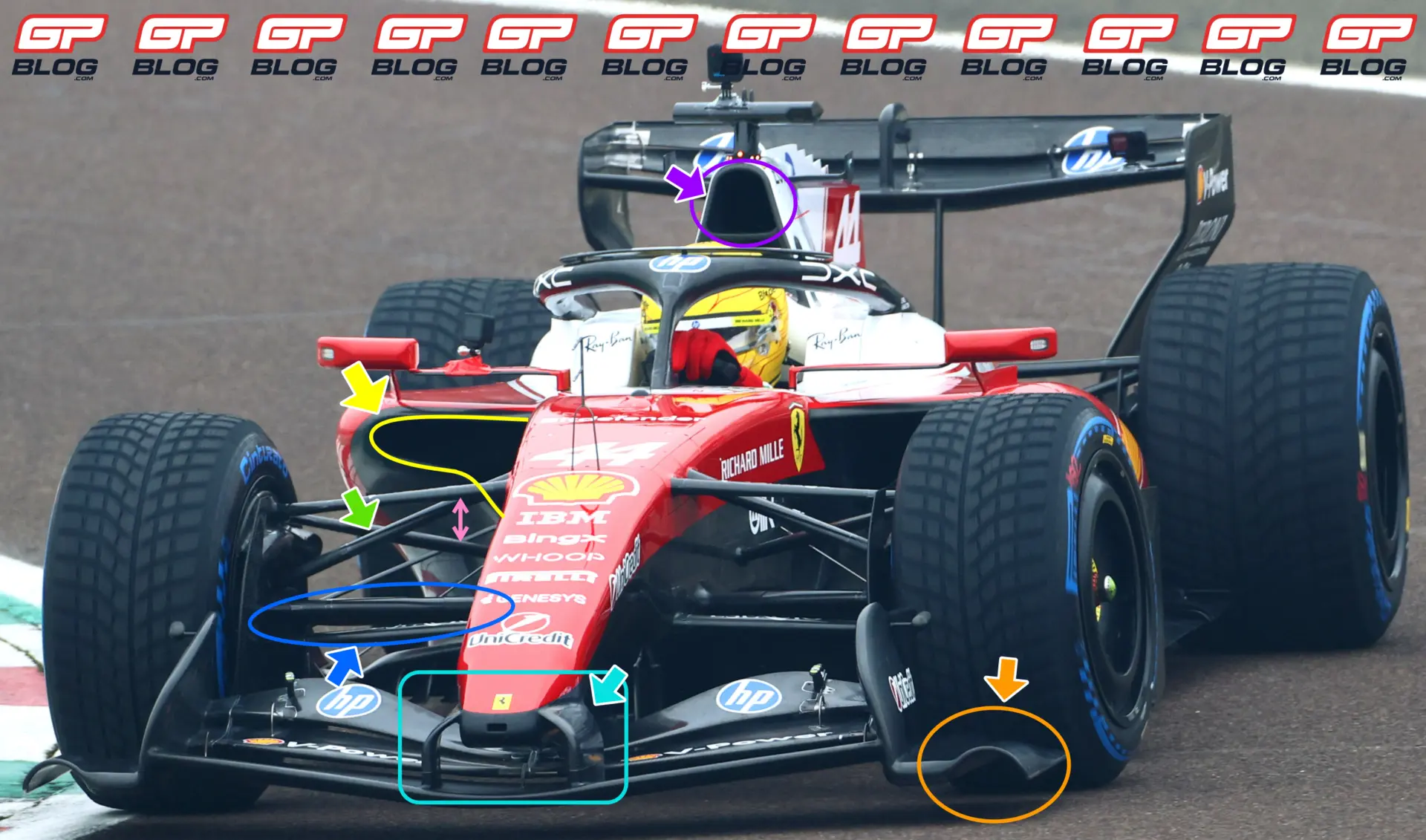
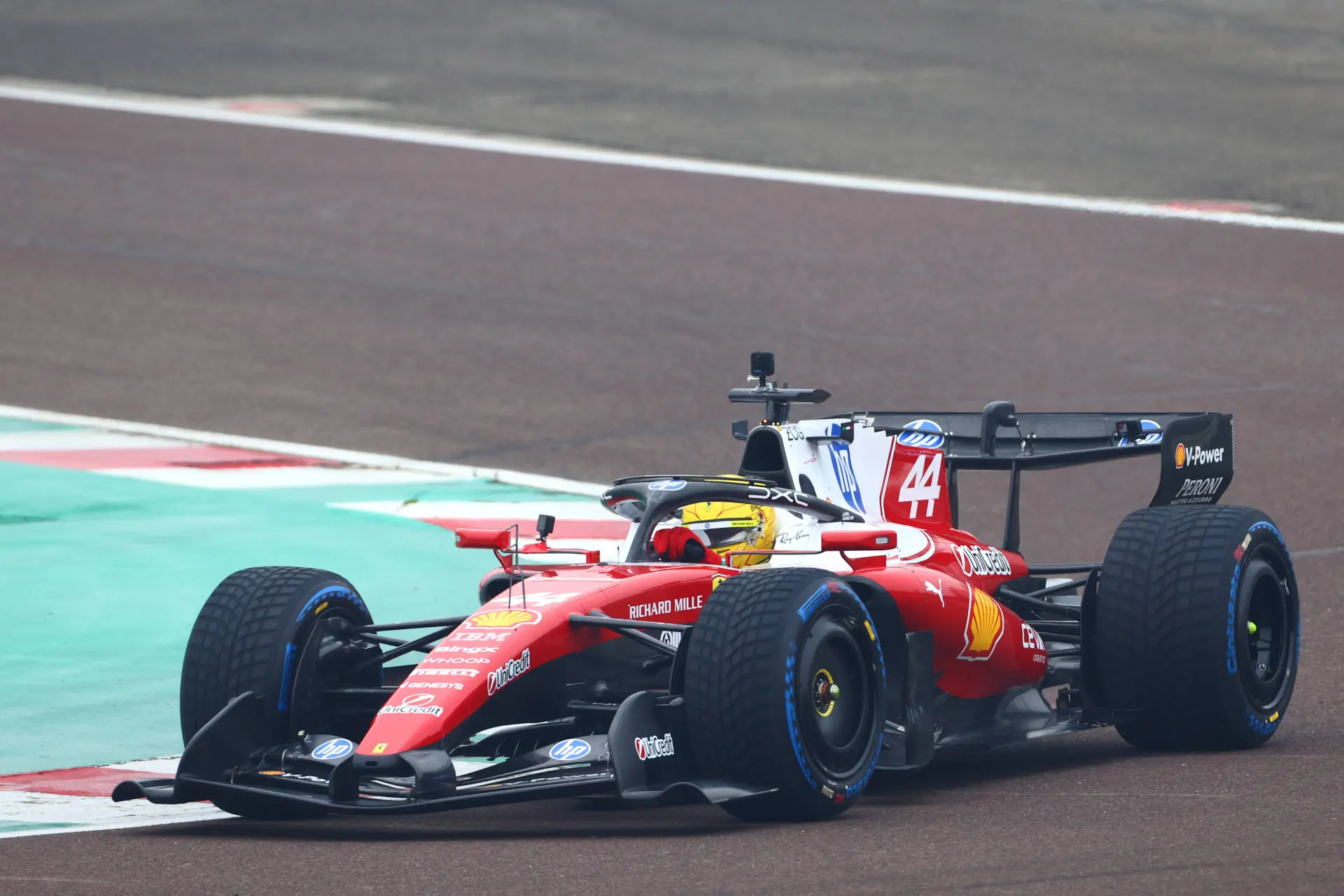
Frontal view of the new SF-26 during the shakedown in Fiorano - Image: Race Pictures

Francesco is a technical analyst at GPblog, specializing in the technical side of Formula 1. Through illustrations and analysis, he makes complex components and developments accessible to a wide audience.
The new Ferrari SF-26, launched yesterday, showed some really interesting solutions on the front of the car, proof of the work done, especially on the mechanical design of the suspension scheme.
With less than 3 days before the beginning of the shakedown in Barcelona, Ferrari launched their new SF-26, which was shown to the world by some renders, before hitting the Fiorano Circuit a few minutes later, completing the 15 km shakedown.
Both Lewis Hamilton and Charles Leclerc drove the new car for a lap and a half each, before the official debut that will take place on Tuesday in Barcelona.
The SF-26 shown in Maranello is a 'base' version, which will be aggressively updated throughout the year. Despite being in its base configuration, it presented some intriguing technical choices, especially in the front wing and suspension schemes.
The push-rod suspension system at both the front and rear, alongside the unique sidepod and aerodynamic design, demonstrates Ferrari's commitment to innovation. Let’s try to explore all the details of the new SF-26.
ADVERTISEMENT
Innovative evolution on the front suspension
Starting to analyse the front wing, it shows a very interesting design of both the nose and the endplate: as indicated by the light blue arrow and circle below, the nose is very narrow and flat at the tip.
The two pylons that support it are anchored to the mainplane and have a very squared L-shape, to divert the flow to the sides of the nose and push the air towards the bodywork and the floor.
As for the endplate, it has a rather simple shape and lacks the horizontal bulkhead and vortex generators seen on the Cadillac and Mercedes, but still features a tray that ends in a shell shape, designed to channel as much air as possible underneath it, generating a vortex and pushing the air outwards from the front wheels, significantly reducing drag.
ADVERTISEMENT
As with many other teams, Ferrari has opted to place a single DRS actuator under the nose of the front wing under the nose, to limit the drag and the turbulence generated by this component.
Now, analysing the front suspension, it has been profoundly developed compared to the design adopted until last year: following the McLaren and Red Bull trend, Ferrari’s engineers have decided to place the steering rack behind the front arm of the lower triangle (blue circle and arrow), as it probably offered benefits from a mechanical point of view.
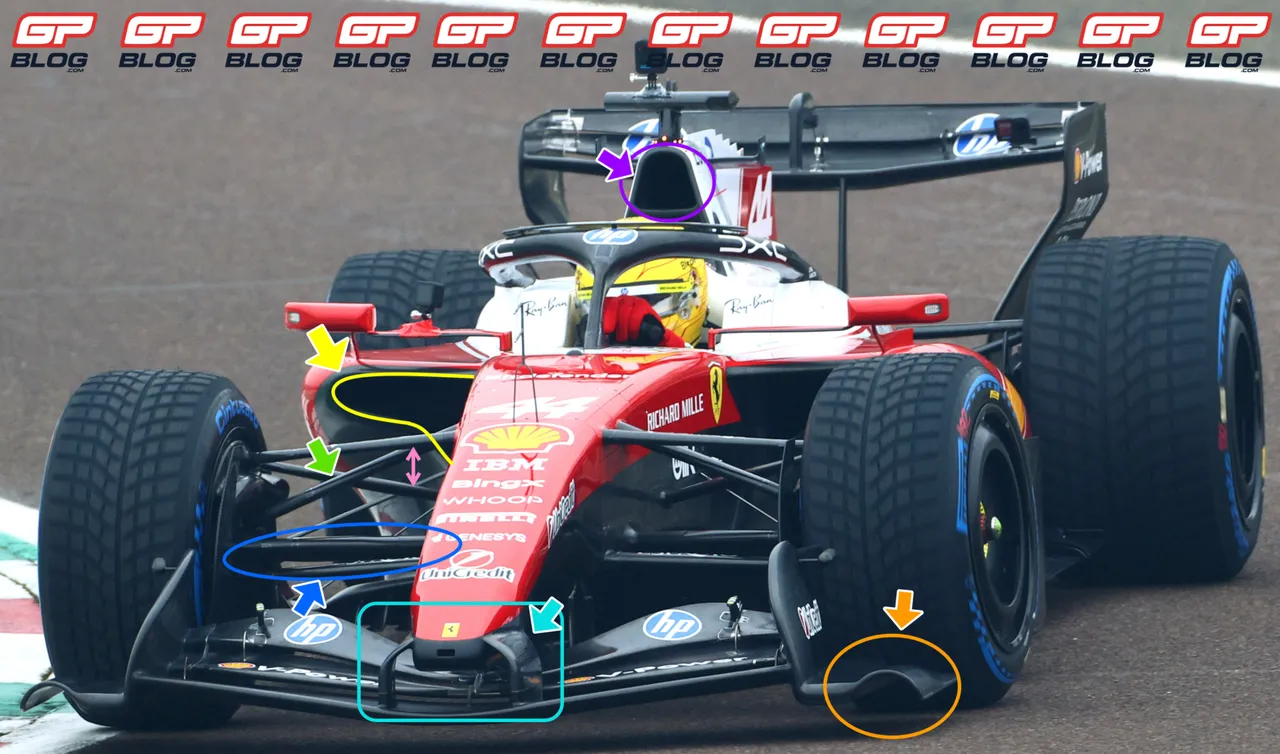
Frontal view of the new SF-26 during the shakedown in Fiorano - Image: Race Pictures
Moreover, the team switched back to the push-rod front suspension scheme after using the pull-rod on the front axle in 2025 (green arrow).
As already explained for Red Bull, this new generation of cars is way more stable and less sensitive to ride height compared to the ground-effect cars, meaning that they won’t need to run as low as it happened until last year, thus having a bigger working window.
ADVERTISEMENT
Another interesting aspect is the big anti-dive angle between the front and rear arms of the upper triangle (pink arrow), following the trend started by McLaren last year.
This big anti-dive angle offers a huge advantage under braking, as it prevents the front of the car from deep diving, which has negative effects on aerodynamics: the flow under the front wing can change massively, impacting the entire aero map of the bodywork.
This solution is probably best suited for this new generation of cars, which will have bigger brake discs on the front axle, to recover as much energy as possible when the driver is lifting and braking, to recharge the battery.
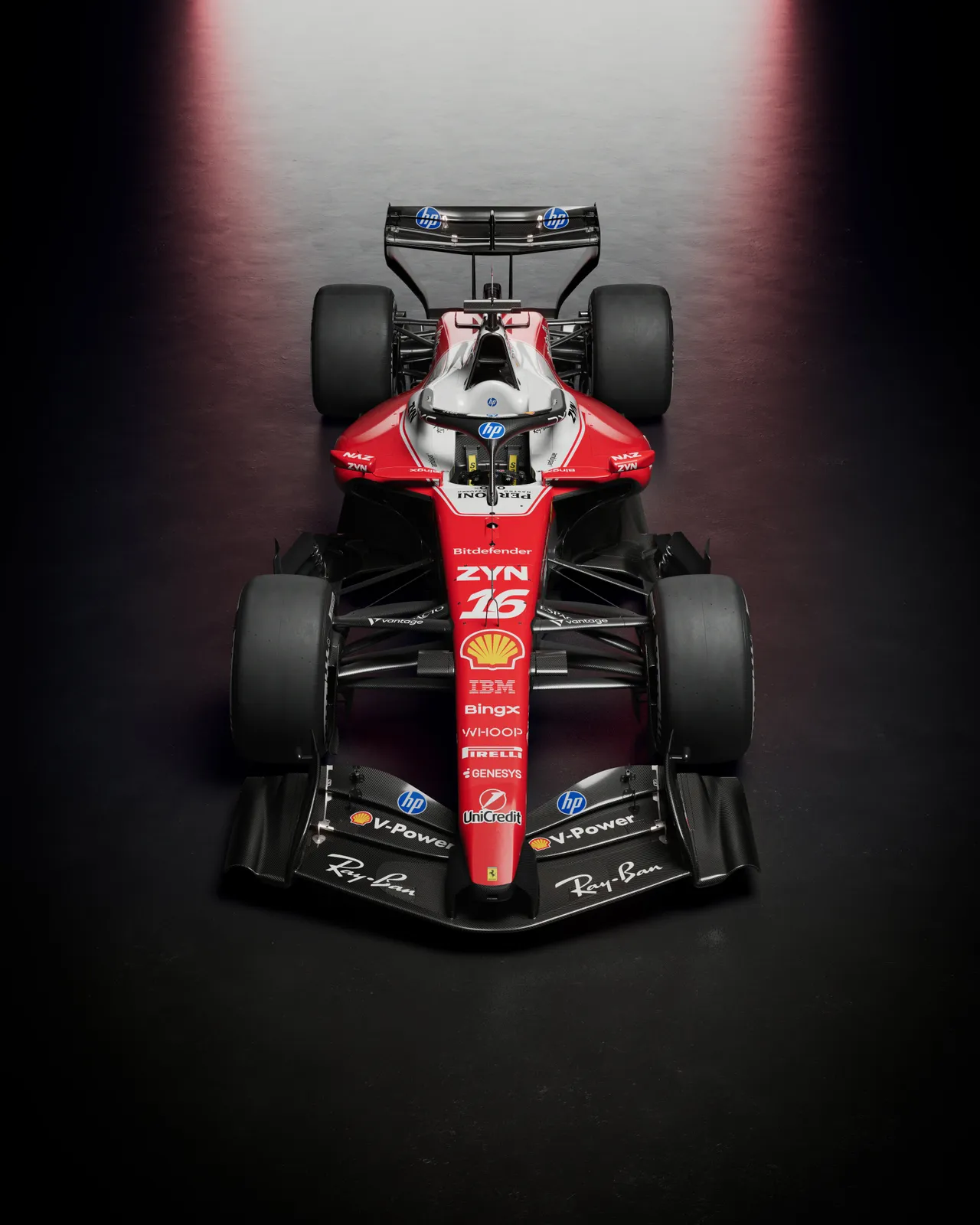
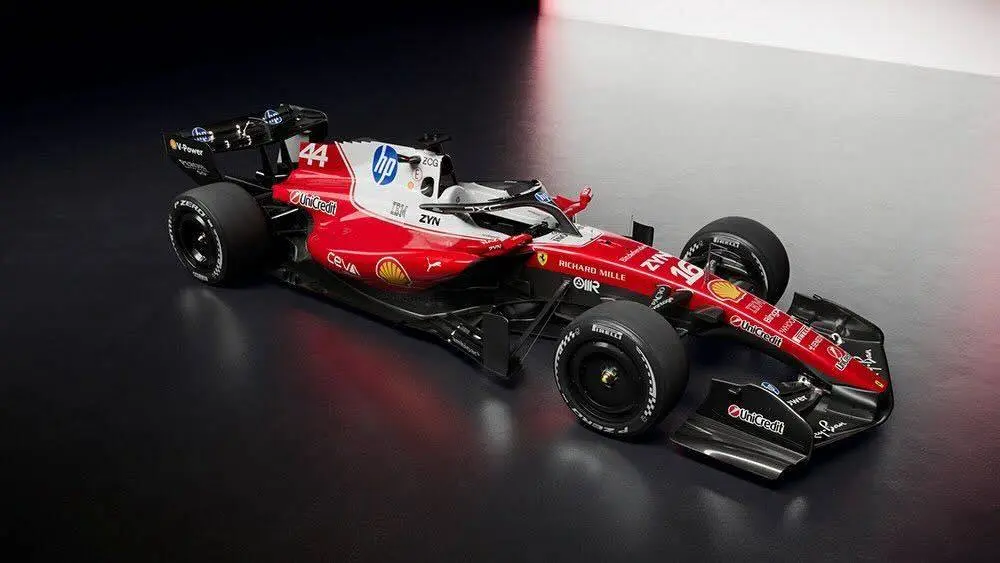
Rendering of the new Ferrari SF-26 - Image: Ferrari
Another interesting detail that emerges from this view is the cooling inlet, which now has an inverted L shape (yellow arrow and line), to generate a high-pressure area and try to push the front wheel turbulence outwards.
ADVERTISEMENT
This element shows a way more conservative design than the one adopted in 2025, and also the undercut of the lower sidepod is smaller compared to what it used to be with the ground-effect cars.
Last but not least, from this view, it’s possible to appreciate the triangular air scope (purple circle and arrow), which is way smaller than the version seen on the VCARB, which indicates that the team decided to place the radiators on the sides of the car rather than behind the driver.
This could have a positive influence on the centre of gravity of the car, as the lower the masses, the better in an F1 car.

Short sidepods and evoluted floor
ADVERTISEMENT
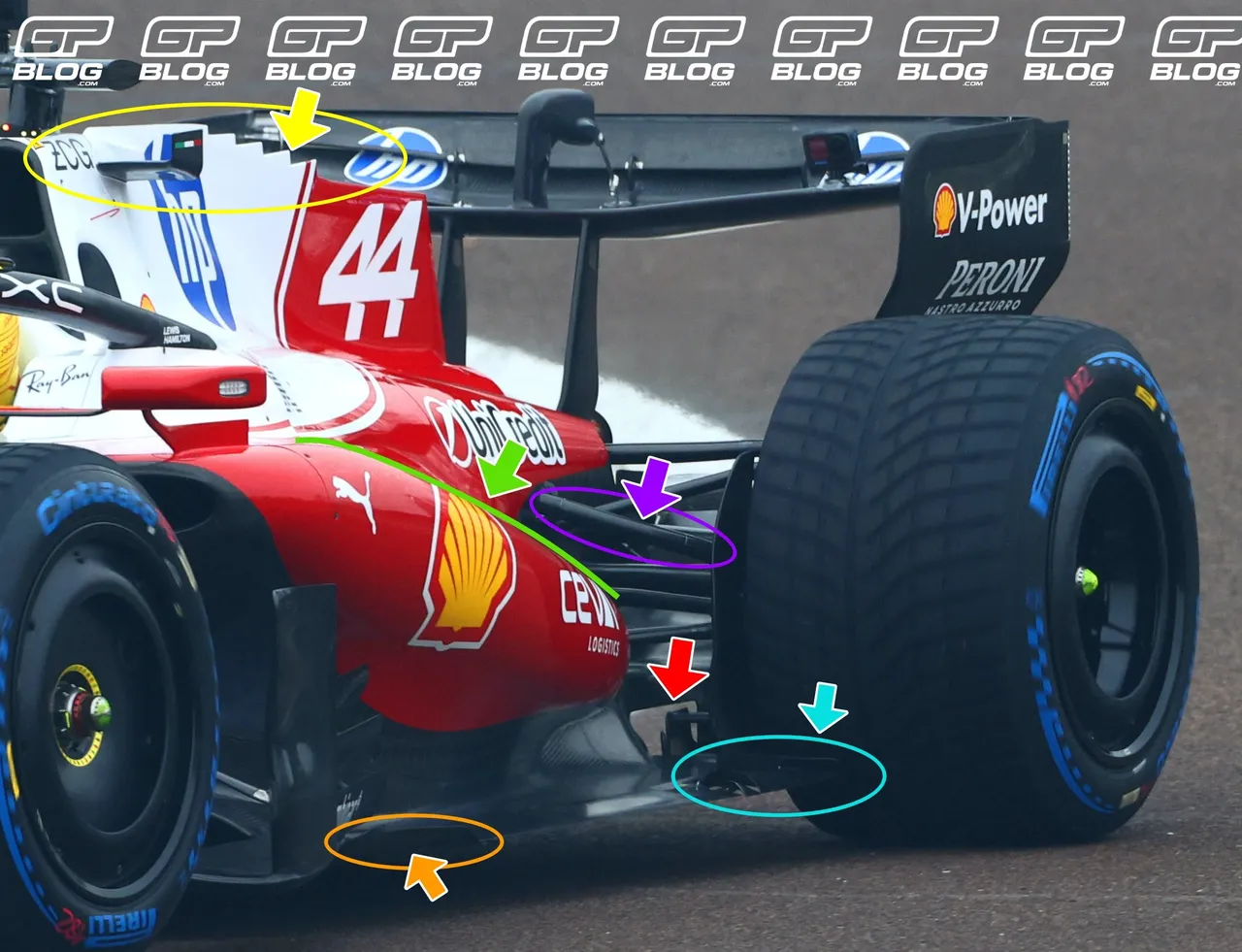
Moving now on to analyse the lateral view, it’s possible to appreciate the shape of the sidepods and the floor’s solutions adopted: as far as the sidepod, they have an oval shape and are much shorter than the version adopted until the end of last season.
Moreover, they are very steep, probably to push as much air as possible towards the rear floor and diffuser (free line and arrow), with a consequent increase in the downforce generated. Related to this choice is the innovative floor design: as highlighted by the orange arrow, the frontal fence shows three horizontal cuts and a vertical element, a very similar solution to the one adopted on the Haas.
In the lower part of this area, where this fence connects to the main floor, the lateral lip has been raised, making a winglet useful for generating a series of vortices that seal off the floor.
Looking at the back-end area of the floor, just in front of the rear tyres (light blue arrow and circle), the floor appears really evaporated, with a series of 45° cuts and a winglet to manage tyre squirt and push the turbulence towards the outside of the rear tyres.
Lateral view of the new SF-26 - Image: Race Pictures
ADVERTISEMENT
The red arrow also points at a large mouse hole on the lateral ramp of the diffuser: this solution has also been spotted on the new Mercedes W17 and is fundamental to divert as much air as possible towards the diffuser, extracting a good amount of downforce.
Another interesting detail from this view is the rear suspension scheme adopted: in complete contrast with the scheme adopted in the last 10 years, Ferrari’s engineers decided to switch to the push-rod tie, a radical change from the mechanical view, proof of the positive influence of the new Technical Director, Löic Serra.
Last but not least, from this view, it’s possible to appreciate the accurate design of the engine cover fin, which has an L shape and generates vortices to clean the airflow towards the rear wing.
Rear view of the new SF-26 - Image: Ferrari
The Z-cut fin follows this trend as well, generating a series of micro vortices to clean the airflow and improve the efficiency of the car, even in small proportions.
ADVERTISEMENT
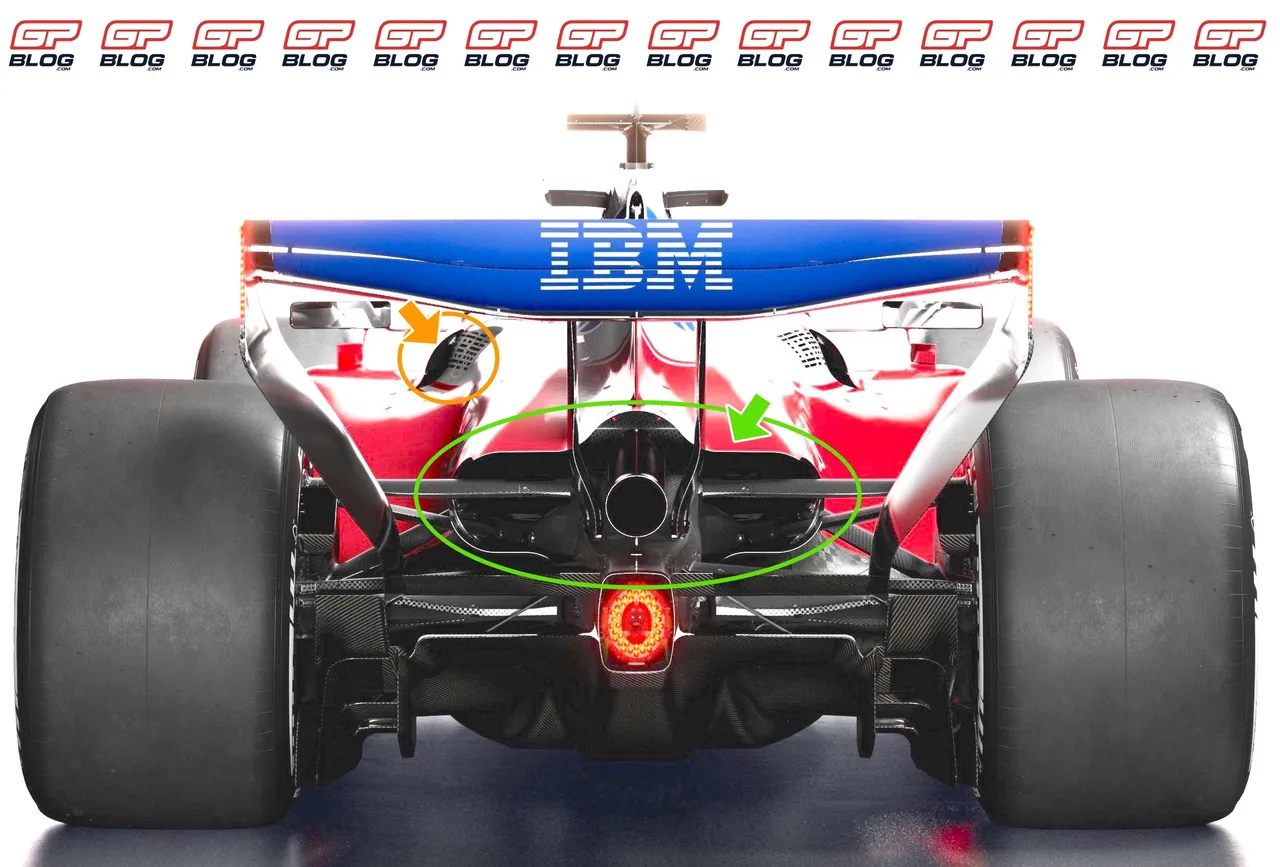
Last but not least, the rear view allows us to appreciate two other details: the engine cover has quite a big exit, as highlighted by the green circle and arrow, and is probably the spec designed for hot conditions, for tracks like Bahrain or Qatar.
Moreover, it’s possible to appreciate two side vents at the shoulders of the halo, which partially dissipate heat into the sidepods, as shown by the orange arrow and circle.
While these solutions may seem promising, only time will tell how they’ll impact performance during testing and in races. The new SF-26 could be a game-changer, and it will be exciting to see how it competes in Barcelona and Bahrain testing sessions.
Read also


Don’t miss GPblog in Google
Mark us as a preferred source and our articles will appear more often at the top of Top Stories.
Add as a preferred / source on Google