Mercedes’ engine dominance has teams confessing frustration after Australia GP

Photo: Race Pictures

Samson Ero is a Formula 1 editor at GPblog with seven years’ experience in sports media. He covers key paddock developments, offering analysis on drivers, teams, and performance trends, with work featured on leading platforms.
Both Williams and McLaren team principals, James Vowles and Andrea Stella, have echoed their sentiment about the Mercedes power unit after observing its performance at the Australian Grand Prix.
Both teams, who are customers of the Mercedes engine, have hinted at being largely reactive to the engine’s behaviour rather than operating from a position of control.
Vowles, who was the first to highlight the issue during the Australian GP weekend, admitted that Mercedes’ work on their power unit had taken them by surprise.

James Vowles in Australia - Photo: Race Pictures
"What Mercedes are doing on the power unit is something that caught us off guard. It took qualifying for us to really see just how off the pace we are and have a go at it. That’s probably three tenths of a second, ballpark," Vowles told GPblog.
ADVERTISEMENT
The 46-year-old, however, expressed confidence that Mercedes had not withheld data, despite the clear gap in power unit performance.
"I’m confident Mercedes have provided us with what we need, because they’re very thorough. I’m confident what they have provided us is the ability to do what they are doing. I don’t know how to do that right now, as I spoke to you today, and that’s what we’re working through in the background, what have we missed and how do we get there faster?"
Vowles concluded by emphasising that the onus is on Williams to extract the same level of performance from the engine as Mercedes.
"It is not an open door as you might imagine, because that’s the foundation of Mercedes‑Benz. So it is down to us to try and work around it. I would say we have to acknowledge that we as Williams do not have the sophistication that they have at other temperatures. And definitely, that’s on us, not on them. The converse is that knowledge they have, which we don’t, and that’s what we’re trying to figure out," he concluded.
Stella on the Mercedes engine
ADVERTISEMENT
Similarly, Stella, when asked about the performance gap between Mercedes and McLaren, explained that his team has also been largely reactive to the power unit’s technicalities.
"The discussion with HPP about having more information has been going on for weeks because even in testing, we were pretty much going on track, running the car, looking at the data, and thinking, ‘Oh, that’s what we have. Good, now we react to what we have.’ That’s not how you work in Formula One," Stella revealed to GPblog.
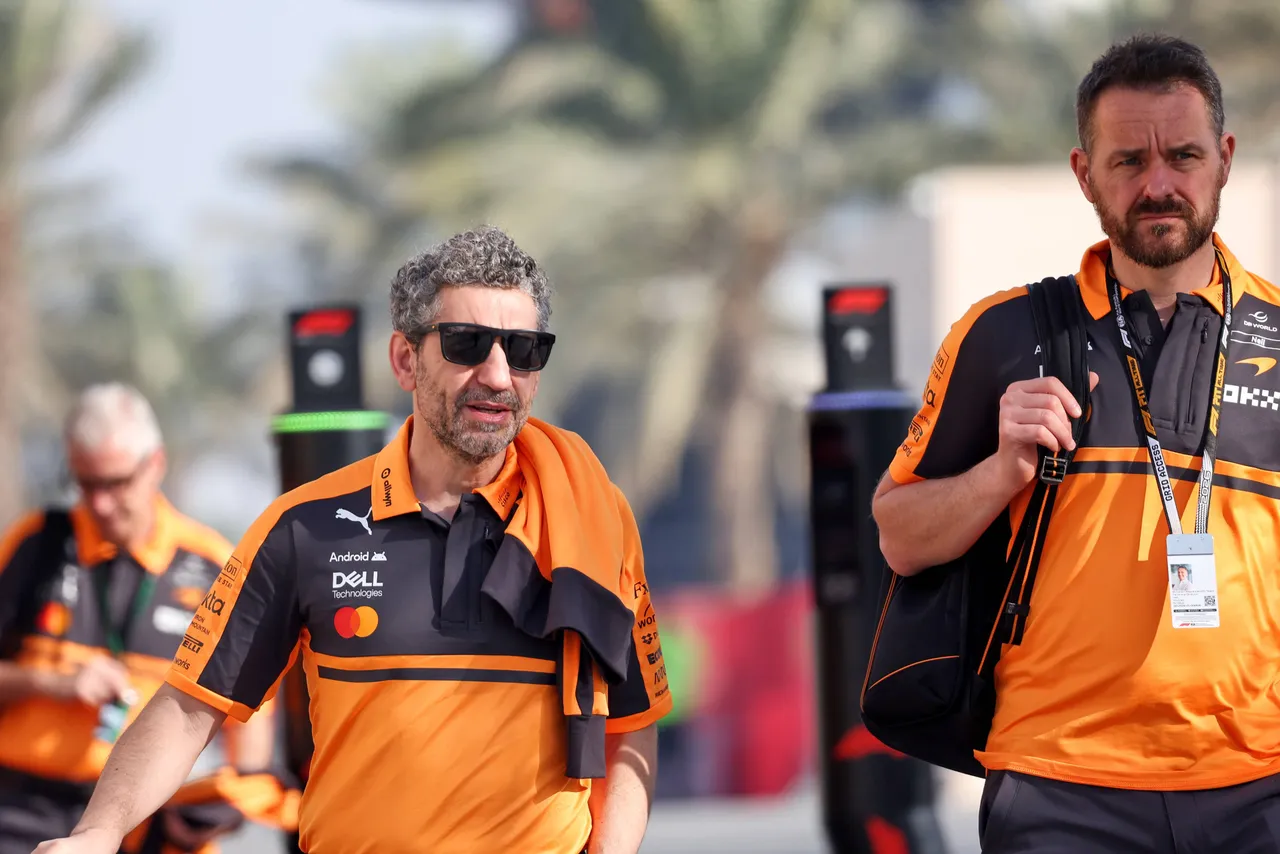
McLaren team principal, Andrea Stella - Photo: Race Pictures
“In Formula One, what happens on track, you simulate. You know what is happening. You know what you’re programming. You know how the car is going to behave. OK, so you also have your plans for how you evolve it that you’ve figured out beforehand, because you know what you are expecting from the car," he added.
Admitting the challenge of the first weeks under the new regulations, Stella acknowledged that McLaren feels on the back foot for the first time as a Mercedes customer.
ADVERTISEMENT
"I have to say, since we are a customer team, this is the first time that we feel we are on the back foot, even when it comes to our ability to predict how the car will behave and anticipate how we can improve it," he concluded.
While Mercedes celebrated a one-two finish at the Australian Grand Prix, McLaren managed only a fifth place for Lando Norris after teammate Oscar Piastri suffered a crash. Williams, meanwhile, saw Alex Albon finish 12th and Carlos Sainz 15th.
GPblog Paddock Update
Want to stay up to date with the latest events from the F1 paddock? GPblog’s Paddock Update is the place to be.
Follow and subscribe to our channels on Spotify and YouTube so you don’t miss a scoop as the action continues to unfold from Albert Park in Australia.
ADVERTISEMENT
Check out the latest episode of our Paddock Update here 👇
Read also

Don’t miss GPblog in Google
Mark us as a preferred source and our articles will appear more often at the top of Top Stories.
Add as a preferred / source on Google