
Shanna is a Formula 1 journalist at GPblog, specializing in both F1 and endurance and GT racing. With a Master’s degree in Journalism and experience at international circuits, she provides in-depth, reliable coverage and insights based on her presence at Grands Prix and racing events worldwide.
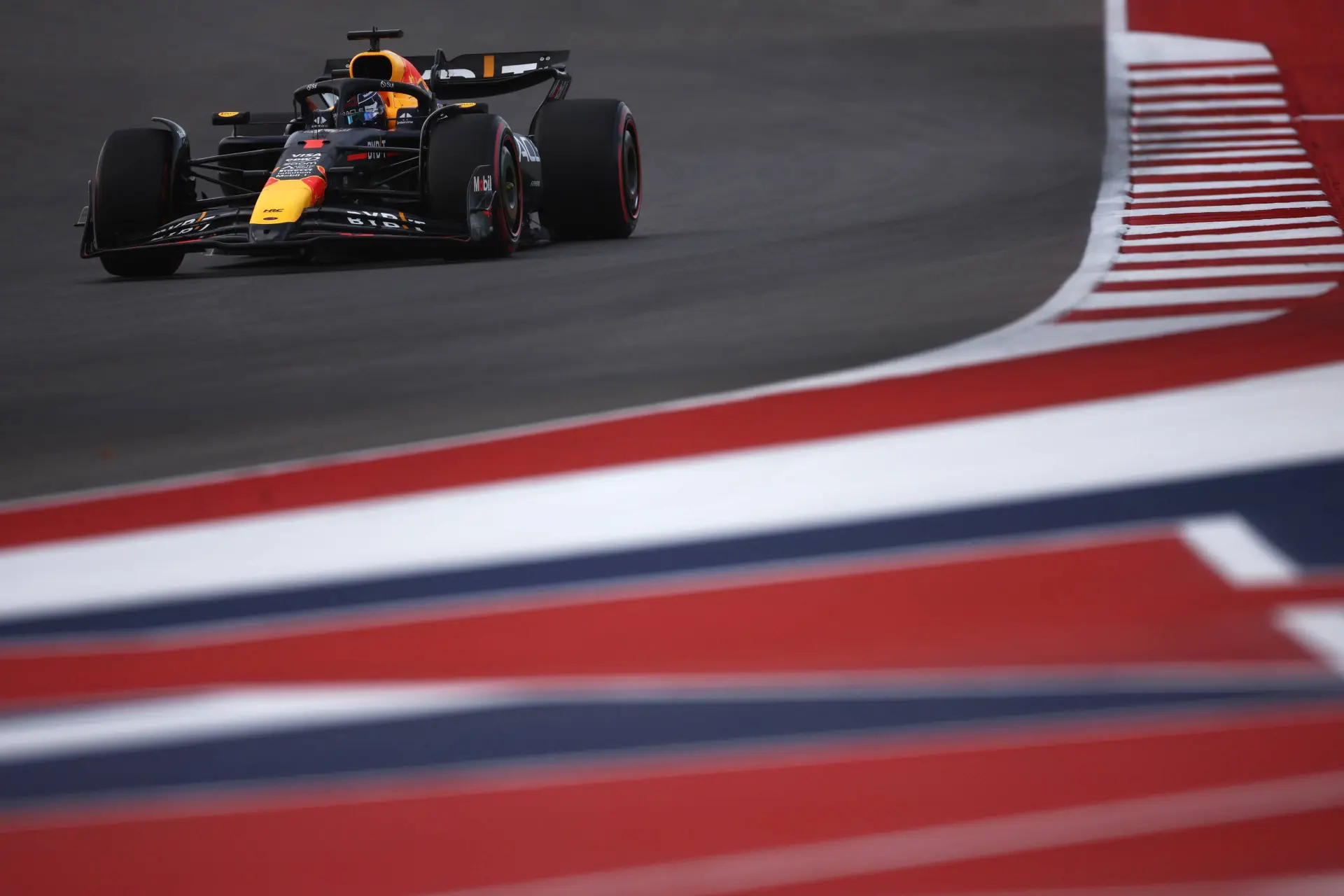
Max Verstappen and Red Bull Racing head into the United States Grand Prix full of confidence, but the new Formula 1 regulations could lead to significant differences at the Circuit of the Americas compared to last year. The long straights and fast sequences of corners will pose a particular challenge. GPblog simulated what a qualifying lap from Verstappen in Austin might look like.
The past three Grands Prix have shown just how much Red Bull Racing has developed. A second-place finish in Baku was followed by victories in Malaysia and Singapore. Verstappen now has a much better-balanced RB22, which has become competitive not only on the straights but also through the corners. That bodes well for the upcoming triple-header in Austin, Mexico and Brazil.
In any case, it remains difficult to compare the speed of today's Formula 1 cars directly with last year's. The new power units rely much more heavily on battery, while the cars generate less downforce and use active aerodynamics. The scale of the difference depends heavily on the characteristics of each circuit. As mentioned, this is a simulation, and we will have to wait and see what the actual results are this weekend.
How fast could Verstappen be in Austin?
For the simulation, GPblog compared the fastest qualifying laps from the 2025 Grands Prix with those from 2026. The absolute fastest lap time from each qualifying weekend was used, regardless of which driver set it. At circuits that featured on the calendar in both seasons, the average difference is around 2.96 percent. The 2026 cars are therefore almost three percent slower on average in qualifying than their predecessors, but there could be big differences between circuits.
ADVERTISEMENT
In Baku, the difference was only around 1.4 percent, while at circuits such as Silverstone, Spa-Francorchamps and Monza, almost four percent was lost. That makes Austin an interesting case. The Circuit of the Americas combines Silverstone's rapid changes of direction with a long straight and several slow corners. As a result, it puts almost every characteristic of the new generation of Formula 1 cars to the test.
Verstappen took pole position in Austin in 2025 with a lap time of 1:32.510. Applying the average difference of around three percent gives an estimated qualifying time of 1:35.280. That is 2.770 seconds slower than last year. A time between 1:34.8 and 1:35.8 should be viewed as an indicative range, not a statistically reliable confidence interval.
Simulated Verstappen qualifying lap at COTA
The graph shows where the biggest differences between the 2025 and 2026 cars could emerge. The blue line provides an indicative reconstruction of the 2025 speed profile, while the red line shows the simulated 2026 lap. The long straight between Turns 11 and 12 is particularly interesting. On the exit of the slow Turn 11, drivers can deploy a lot of electrical energy to accelerate quickly. However, that energy is of course limited.

Max Verstappen's 2025 qualifying lap in Austin vs. his potential fastest lap in 2026 - Source: GPblog
ADVERTISEMENT
As the electrical assistance diminishes further along the straight, acceleration can decrease. This phenomenon is known as clipping. It does not necessarily mean that the car immediately loses speed, but it does mean that less power is available than when the electrical assistance is fully active. As a result, the speed curve may flatten towards the end of a straight. In more extreme cases, a car may even lose speed before the driver begins braking.
That makes energy deployment particularly important. Teams must decide where their drivers can make the best use of the available power without losing too much time elsewhere on the lap. An aggressive deployment immediately after Turn 11 is not automatically the fastest solution if it means less energy is available further down the track.
The battery is not the only challenge at COTA
The first sector of the Circuit of the Americas is just as interesting. After the steep climb towards Turn 1 comes a sequence of fast changes of direction that places high demands on the car's aerodynamic balance. The 2026 cars generate less downforce than the previous generation. As a result, Verstappen could lose time in the fast esses between Turns 3 and 9 compared with his 2025 qualifying lap. On the other hand, the cars are lighter, which could also give them an advantage through changes of direction.
The final sector then provides an important test for the improved Red Bull. The long, sweeping turns from Turn 16 through Turn 18 in particular demand a stable rear end and predictable balance. A car that starts to slide there will lose time through several consecutive corners. That was a recurring concern for Verstappen earlier this season. However, following the recent developments to the RB22, the car's handling has improved considerably. After his victory in Malaysia, Verstappen said the car was once again doing what he wanted. That confidence was reinforced in Singapore, where he proved fastest again despite the very different circuit characteristics.
ADVERTISEMENT
Austin offers reasons for optimism for Red Bull
The results from the previous triple header give Red Bull reason for optimism. In Baku, the RB22 was particularly competitive on the straights, although Verstappen was hampered in qualifying by problems with the power unit and the available electrical energy. During the race, he ultimately finished just two tenths behind George Russell. In Malaysia, Red Bull then showed that it was no longer reliant solely on top speed.

Max Verstappen has enjoyed an encouraging run of results in Austin - Photo: Red Bull content pool
Verstappen also had a competitive car through the fast corners and was particularly strong on long runs during the race. This earned Red Bull its first Grand Prix victory of the season. Singapore may have provided the most significant confirmation of the team’s progress. Earlier this year, the Red Bull had struggled with slow corners, kerbs and bumps, but Verstappen took pole position and won both the sprint race and the Grand Prix.
The improvements therefore appear to extend beyond just one type of circuit. The team has made progress in aerodynamic balance and car setup, allowing Verstappen to make better use of the power unit’s characteristics. That does not automatically mean Red Bull will have the fastest car in Austin. The Circuit of the Americas demands a compromise between top speed, aerodynamic efficiency and stability through different types of corners. Energy management also remains a key unknown.
ADVERTISEMENT
The recent results do make clear, however, that Verstappen heads into the upcoming triple header with a much stronger overall package than he had a few races ago. Austin will therefore be an important benchmark for whether Red Bull can maintain its strong form at a circuit that puts virtually every aspect of the RB22 to the test.

Don’t miss GPblog in Google
Mark us as a preferred source and our articles will appear more often at the top of Top Stories.
Add as a preferred / source on Google