Verstappen sends stark warning over Dutch motorsport future amid Zandvoort uncertainty
20:00, 11 Aug
1 Comments

Ben Hunt is an award-winning motorsport journalist with over two decades of experience in Formula 1 and international media. As a former editor-in-chief and bestselling author, he delivers in-depth analysis and strategic insight from the highest level of the sport.
Max Verstappen has warned that Dutch motorsport risks suffering a decline similar to Germany if it does not receive stronger support from the government, as uncertainty continues to surround the long-term future of the Dutch Grand Prix at Zandvoort.
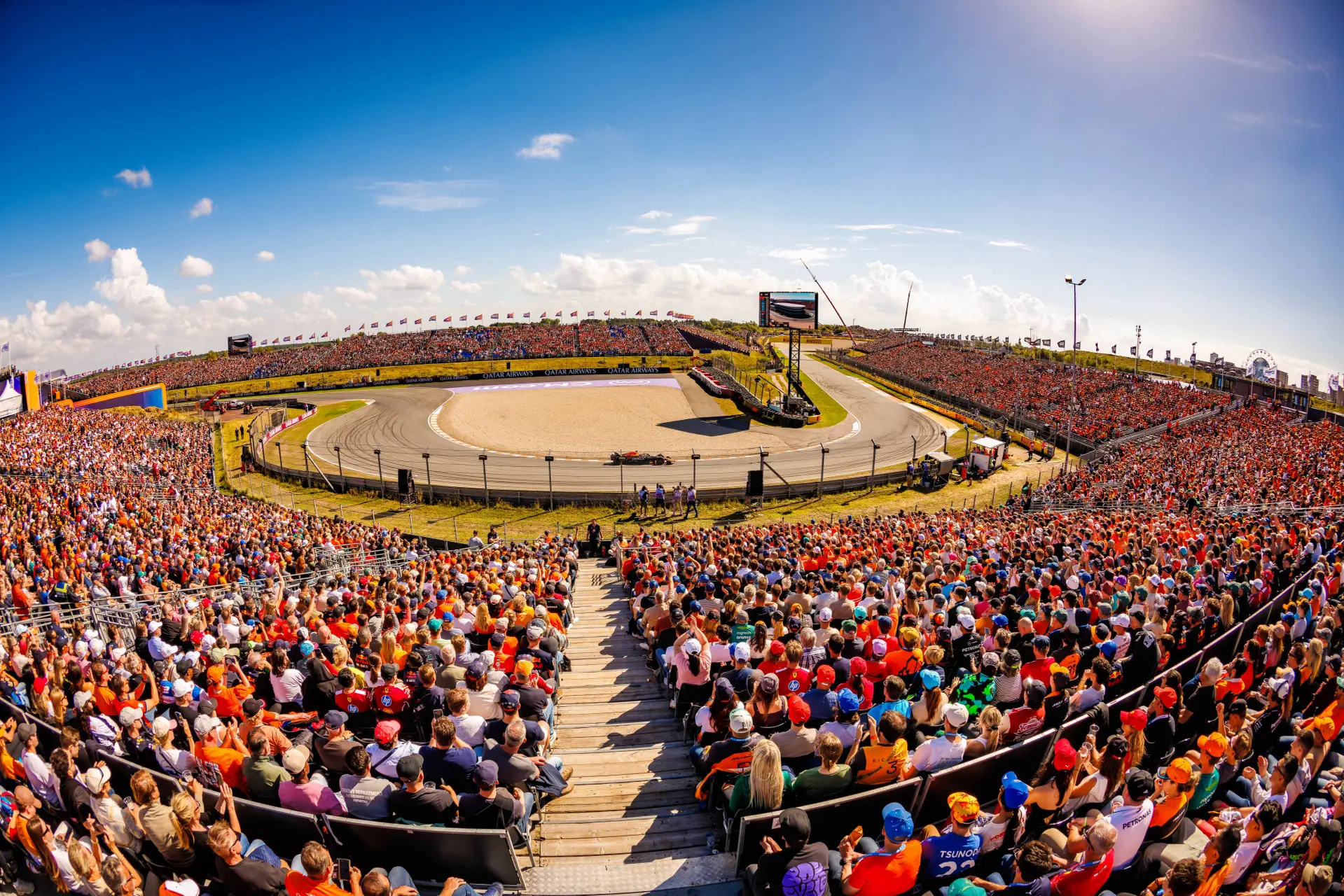
The warning comes at a sensitive moment for Formula 1 in the Netherlands. Verstappen’s success has transformed the country’s relationship with the sport, turning F1 from a niche interest into a national phenomenon. The orange grandstands at Zandvoort have become one of the defining images of the modern calendar, while Verstappen’s dominance has inspired a new generation of Dutch racing fans.
But Verstappen has now suggested that popularity alone is not enough to secure the future of motorsport in the Netherlands. Without structural support, he believes the country could follow the path of Germany, where Formula 1 once enjoyed a golden era but has since faded from the calendar and lost much of its top-level presence.
That comparison is significant because Germany was once one of Formula 1’s strongest markets, powered by Michael Schumacher’s success, major manufacturers, iconic circuits and huge television audiences. Yet in recent years, the country has had no regular Grand Prix, fewer visible pathways for young drivers, and a reduced role in the sport’s public consciousness. For Verstappen, that should act as a warning to the Netherlands.
The Dutch Grand Prix has been a major success since returning to the calendar, but its future is not guaranteed indefinitely. Zandvoort’s event has leaned heavily on the Verstappen effect, with huge demand from fans eager to watch their home hero compete on home soil. However, maintaining a Formula 1 race requires more than enthusiasm. It depends on financing, infrastructure, political will and long-term planning.
That is where Verstappen’s comments cut into a wider issue. The question is no longer simply whether Zandvoort can sell tickets while Verstappen is winning. The bigger concern is whether the Netherlands is building a sustainable motorsport culture that can survive beyond one driver’s peak years.
Verstappen’s rise has created a rare opportunity. He has given Dutch motorsport a level of visibility it had never previously enjoyed. Karting, junior racing and Formula 1 have all benefited from his profile. But if that moment is not supported properly, there is a risk that the sport’s current popularity could fade once Verstappen is no longer fighting at the front.
The comparison with Germany is therefore especially powerful. German motorsport did not collapse overnight. It gradually lost momentum as costs rose, calendar priorities shifted, and public and political support failed to match the sport’s demands. Verstappen appears to be warning that the Netherlands cannot assume it is immune from the same pattern.
The warning comes at a sensitive moment for Formula 1 in the Netherlands. Verstappen’s success has transformed the country’s relationship with the sport, turning F1 from a niche interest into a national phenomenon. The orange grandstands at Zandvoort have become one of the defining images of the modern calendar, while Verstappen’s dominance has inspired a new generation of Dutch racing fans.
But Verstappen has now suggested that popularity alone is not enough to secure the future of motorsport in the Netherlands. Without structural support, he believes the country could follow the path of Germany, where Formula 1 once enjoyed a golden era but has since faded from the calendar and lost much of its top-level presence.
That comparison is significant because Germany was once one of Formula 1’s strongest markets, powered by Michael Schumacher’s success, major manufacturers, iconic circuits and huge television audiences. Yet in recent years, the country has had no regular Grand Prix, fewer visible pathways for young drivers, and a reduced role in the sport’s public consciousness. For Verstappen, that should act as a warning to the Netherlands.
The Dutch Grand Prix has been a major success since returning to the calendar, but its future is not guaranteed indefinitely. Zandvoort’s event has leaned heavily on the Verstappen effect, with huge demand from fans eager to watch their home hero compete on home soil. However, maintaining a Formula 1 race requires more than enthusiasm. It depends on financing, infrastructure, political will and long-term planning.
That is where Verstappen’s comments cut into a wider issue. The question is no longer simply whether Zandvoort can sell tickets while Verstappen is winning. The bigger concern is whether the Netherlands is building a sustainable motorsport culture that can survive beyond one driver’s peak years.
Verstappen’s rise has created a rare opportunity. He has given Dutch motorsport a level of visibility it had never previously enjoyed. Karting, junior racing and Formula 1 have all benefited from his profile. But if that moment is not supported properly, there is a risk that the sport’s current popularity could fade once Verstappen is no longer fighting at the front.
The comparison with Germany is therefore especially powerful. German motorsport did not collapse overnight. It gradually lost momentum as costs rose, calendar priorities shifted, and public and political support failed to match the sport’s demands. Verstappen appears to be warning that the Netherlands cannot assume it is immune from the same pattern.
Zandvoort needs financial support
For Zandvoort, the message lands directly in the middle of the debate over its place on the F1 calendar. The Dutch Grand Prix has become one of the most recognisable races of the season, helped by its coastal setting, passionate crowd and festival atmosphere. Yet Formula 1’s calendar is increasingly competitive, with new markets pushing for races and existing venues needing to justify their place year after year.
If the Dutch government wants to keep motorsport prominent, Verstappen’s argument suggests it cannot leave everything to private organisers and fan demand. Government support could play a role in securing major events, improving facilities, helping young drivers and ensuring the sport remains accessible rather than becoming dependent on a single superstar.
There is also a symbolic element. Verstappen has carried Dutch motorsport to unprecedented heights, but his warning makes clear that even his success has limits. A world champion can inspire a movement, but he cannot build the entire structure around it alone.
As the Dutch Grand Prix enters what could become a defining period for its future, Verstappen’s message is difficult to ignore. The Netherlands has enjoyed the full force of the Verstappen era, but the next challenge is turning that moment into something lasting.
Without long-term support, the fear is clear and Dutch motorsport could one day look back on this period not as the start of a new era, but as a peak that was allowed to pass.
If the Dutch government wants to keep motorsport prominent, Verstappen’s argument suggests it cannot leave everything to private organisers and fan demand. Government support could play a role in securing major events, improving facilities, helping young drivers and ensuring the sport remains accessible rather than becoming dependent on a single superstar.
There is also a symbolic element. Verstappen has carried Dutch motorsport to unprecedented heights, but his warning makes clear that even his success has limits. A world champion can inspire a movement, but he cannot build the entire structure around it alone.
As the Dutch Grand Prix enters what could become a defining period for its future, Verstappen’s message is difficult to ignore. The Netherlands has enjoyed the full force of the Verstappen era, but the next challenge is turning that moment into something lasting.
Without long-term support, the fear is clear and Dutch motorsport could one day look back on this period not as the start of a new era, but as a peak that was allowed to pass.
Don’t miss GPblog in Google
Mark us as a preferred source and our articles will appear more often at the top of Top Stories.
Add as a preferred / source on GoogleRead more about:
latest news
Azerbaijan Grand Prix
Overview
Thursday 24.09.26
Practice 1
08:30 AM
Practice 2
12:00 PM
Friday 25.09.26
Practice 3
08:30 AM
Qualification
12:00 PM
Saturday 26.09.26
Race
11:00 AM
Thursday 24.09.26
Practice 1
Thu 08:30 AM
Practice 2
Thu 12:00 PM
Friday 25.09.26
Practice 3
Fri 08:30 AM
Qualification
Fri 12:00 PM
Saturday 26.09.26
Race
Sat 11:00 AM
Times are in your local timezone
Rumors
Popular on GPBlog
1
F1 forced to break with tradition for expected season finale in Imola
7595 times read

2
Of all people, Zara Larsson seems to reveal the fate of the Abu Dhabi Grand Prix
913 times read
3
FIA president under fire after stepping in over Alonso’s uncertain F1 future
765 times read
4
Rosberg reveals where Mercedes has the real edge over Red Bull engine
730 times read
F1-stand 2026
Season
| Pos. | Driver | Team | Points |
|---|---|---|---|
1 | MercedesMER | 292 | |
2 | MercedesMER | 211 | |
3 | FerrariFER | 191 | |
4 | McLarenMCL | 186 | |
5 | FerrariFER | 167 | |
6 | Red Bull RacingRBR | 145 | |
7 | McLarenMCL | 120 | |
8 | Red Bull RacingRBR | 71 | |
9 | Racing BullsRCB | 59 | |
10 | AlpineALP | 41 |
Loading