Red Bull finally able to challenge Mercedes thanks to updates
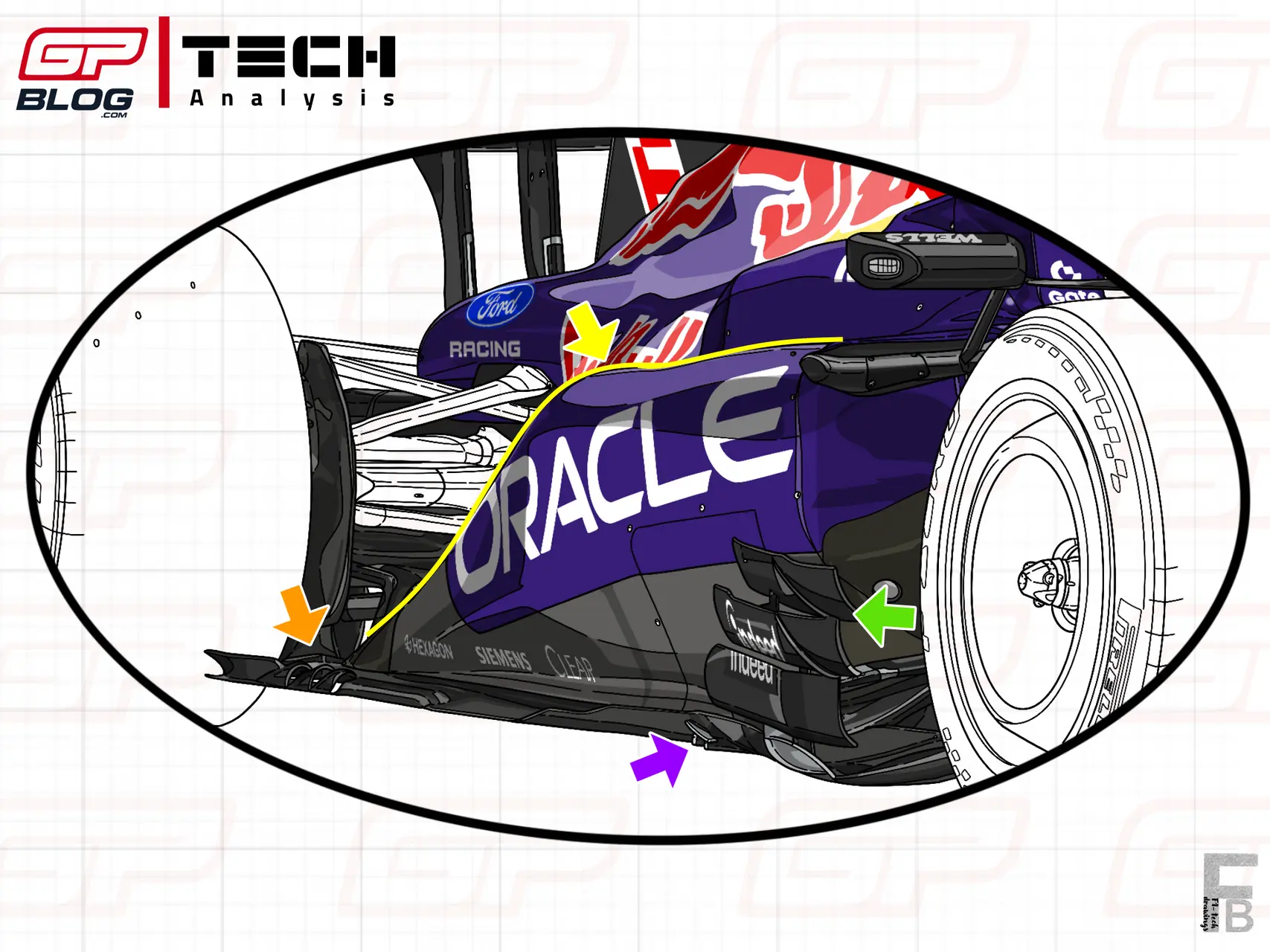
RB22's new sidepod version introduced for the Miami Grand Prix - Photo: Francesco Bianchi
21:04, 04 May
2 Comments

Francesco is a technical analyst at GPblog, specializing in the technical side of Formula 1. Through illustrations and analysis, he makes complex components and developments accessible to a wide audience.
Red Bull Racing made a huge step forward in Miami after introducing a “B” version of their car to challenge rivals. After struggling to even get into the top five during the first races of the season, a strong weekend in Miami confirmed the impact of the updates.
For the fourth round of the season, the team introduced a “B” version of the RB22 not only to improve performance, but especially to solve the balance and stability issues that negatively affected the drivers’ confidence, particularly in qualifying, during the opening races.
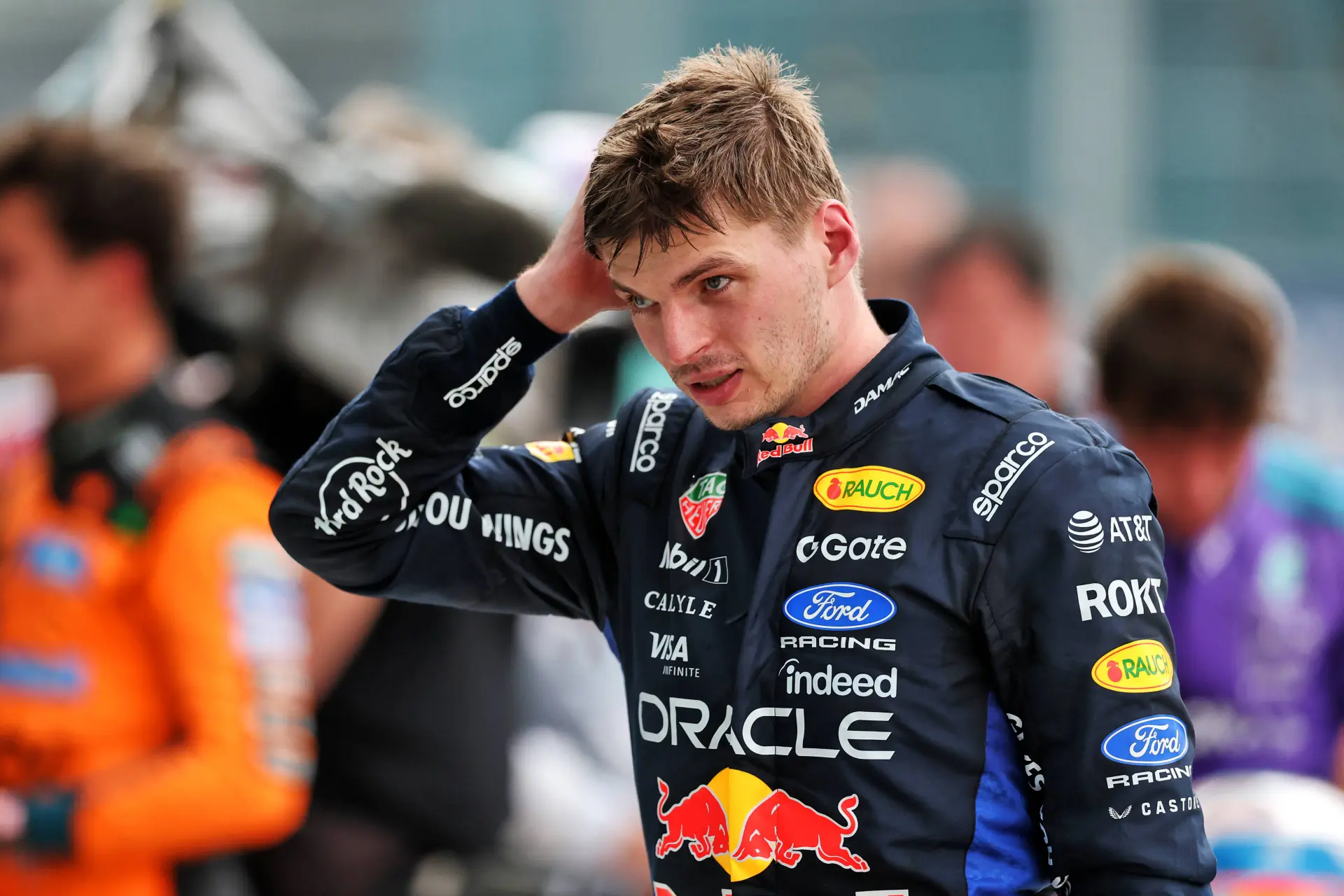
The results were evident: Verstappen managed to qualify in P2 for the first time this season and finished the race in P5, completing 50 laps on the hard tyres. Let’s try to understand where the advantage is coming from.
A "B" version of the RB22 in all the details
ADVERTISEMENT
After the Japanese Grand Prix, Red Bull Racing was facing one of their toughest starts to a season in recent years, with Verstappen scoring only 12 points in three races. The biggest problem for the team, however, stemmed from the car: the RB22 showed very unstable behaviour in both slow-speed and high-speed corners, which affected the drivers’ confidence in qualifying and in the race.
These balance issues made the car slower, as drivers constantly had to fight understeer and oversteer through cornering phases, losing significant lap time as a result.
During the five-week break in April, the team took time not only to work on the upgrades already planned for Miami, but especially to address these issues, as they were at the root of their difficulties.

Photo: Red Bull Content Pool
The team introduced a series of strategic upgrades for the fourth round of the season, hoping they would drastically improve the car’s balance and make it easier for engineers to find a good set-up during the weekend. The package of updates concerned all the key components of the car: sidepods, floor, diffuser, rear wing, and a small change to the front wing as well.
ADVERTISEMENT
Analysing the changes to the sidepods and floor, the team introduced a significantly revised version of these components compared to the one seen up to Suzuka, with several interesting details. As visible in the drawing below, the new sidepod features a sloping shape to maximise airflow towards the floor and diffuser.
The upper edge now has a very steep slope at the rear, specifically to push a greater amount of air towards the diffuser and the large “mouse hole” located to the side of the diffuser ramp (arrow and yellow line). In addition to the external changes, the team also redesigned the internal side of the sidepods, further hollowing and lengthening it to increase airflow to the rear and the downforce generated by the bodywork.

RB22's new sidepod version introduced for the Miami Grand Prix - Photo: Francesco Bianchi
As for the floor, it features modifications both to the lateral fence in front of the front wheels and to the rear. Indicated by the green arrow, the bargeboard has been modified to push turbulence from the front wheels outwards, with two small profiles created on the upper elements.
At the front of the floor, the side edge has been shaped with vortex generators to seal the edge and maximise downforce (purple arrow). Finally, at the rear, the floor has undergone micro-aerodynamic changes (orange arrow) to work in synergy with the front modifications and better manage turbulence coming from the rear wheels.
ADVERTISEMENT
Regarding the front wing, Red Bull’s engineers, in line with a solution adopted by most teams on the grid, have introduced a horizontal tray on the upper side of the endplate. This helps generate vortices that push airflow outwards, reducing drag, and also help seal the floor edge, preventing turbulence from being drawn underneath.

The new Red Bull's front wing introduced in Miami - Photo: GPblog
Last but not least, the most innovative change likely concerned the rear wing, as Red Bull introduced their own “Macarena” version, with two top flaps which rotate 160° counterclockwise when straight-line mode is activated. The peculiar aspect of this system is that the two profiles are not only rotated, but also slightly lifted, taking full advantage of the available gap when activated.
As a result, more air passes through, reducing drag and increasing efficiency. It is no coincidence that the RB22 proved to be among the fastest cars on the straights during qualifying in Miami, likely due to a combination of the rear wing and strong energy deployment.

RB22's innovative "Macarena" rear wing introduced in Miami - Photo: Race Pictures
ADVERTISEMENT
Team Principal Laurent Mekies explained the team’s development process after the race: “Regardless of that, we do not give, at the moment, a consistent car to our drivers, a car they can push with confidence, lap to lap, corner to corner. And that was most of the work that has been done in this five-week break, in addition to the normal development.
“So yes, there is a split between the two, whatever the number or whatever the split is. But of course, it was tangible. It is lap time. We knew we were losing a serious amount of lap time. With that lack of confidence the drivers could have in the car, the steering was one aspect, we had quite a few other aspects as well, and we still have a few to sort out,” added the Frenchman.
These updates delivered the hoped-for results immediately, with Verstappen and Hadjar feeling more confident in the car and showing a very competitive long-run simulation during FP1. The first positive signal came during the Sprint on Saturday: despite a poor start, Verstappen was able to recover and almost overtook Russell in the closing laps, demonstrating that the car was not only more balanced, but also quicker than in Japan.

Verstappen during the race - Photo: Race Pictures
The team made further set-up adjustments after the Sprint, allowing the RB22 to improve further. Verstappen qualified in P2 on Saturday, just one and a half tenths behind Antonelli on pole. During Sunday’s race, he maintained competitive lap times and eventually finished in P5, completing 50 laps on the hard compound following an early strategic decision.
ADVERTISEMENT
In conclusion, it was a very positive weekend for Red Bull, as they managed to make clear progress with the upgrade package, improving the car’s balance and consistency. The real challenge now will be to confirm this performance on different layouts such as Montreal and Monaco, where it will be interesting to see how the car performs under varying conditions.
Don’t miss GPblog in Google
Mark us as a preferred source and our articles will appear more often at the top of Top Stories.
Add as a preferred / source on GoogleRead more about:
latest news
Azerbaijan Grand Prix
Overview
Thursday 24.09.26
Practice 1
08:30 AM
Practice 2
12:00 PM
Friday 25.09.26
Practice 3
08:30 AM
Qualification
12:00 PM
Saturday 26.09.26
Race
11:00 AM
Thursday 24.09.26
Practice 1
Thu 08:30 AM
Practice 2
Thu 12:00 PM
Friday 25.09.26
Practice 3
Fri 08:30 AM
Qualification
Fri 12:00 PM
Saturday 26.09.26
Race
Sat 11:00 AM
Times are in your local timezone
Rumors
Popular on GPBlog
1
Leclerc swaps Ferrari red for striking all-black look in Singapore
2510 times read

2
Fernando Alonso eyes 2027 WEC switch with Aston Martin
2130 times read
3
MotoGP Full Sprint Race Results | Martin wins after Acosta crash breaks KTM hearts
1791 times read

4
MotoGP Full Qualifying Results | Martin defeats Marquez to claim Austria pole
753 times read
F1-stand 2026
Season
| Pos. | Driver | Team | Points |
|---|---|---|---|
1 | MercedesMER | 292 | |
2 | MercedesMER | 211 | |
3 | FerrariFER | 191 | |
4 | McLarenMCL | 186 | |
5 | FerrariFER | 167 | |
6 | Red Bull RacingRBR | 145 | |
7 | McLarenMCL | 120 | |
8 | Red Bull RacingRBR | 71 | |
9 | Racing BullsRCB | 59 | |
10 | AlpineALP | 41 |
Loading