GPblog writers split - Genuine racing or artificial show in new F1 era?
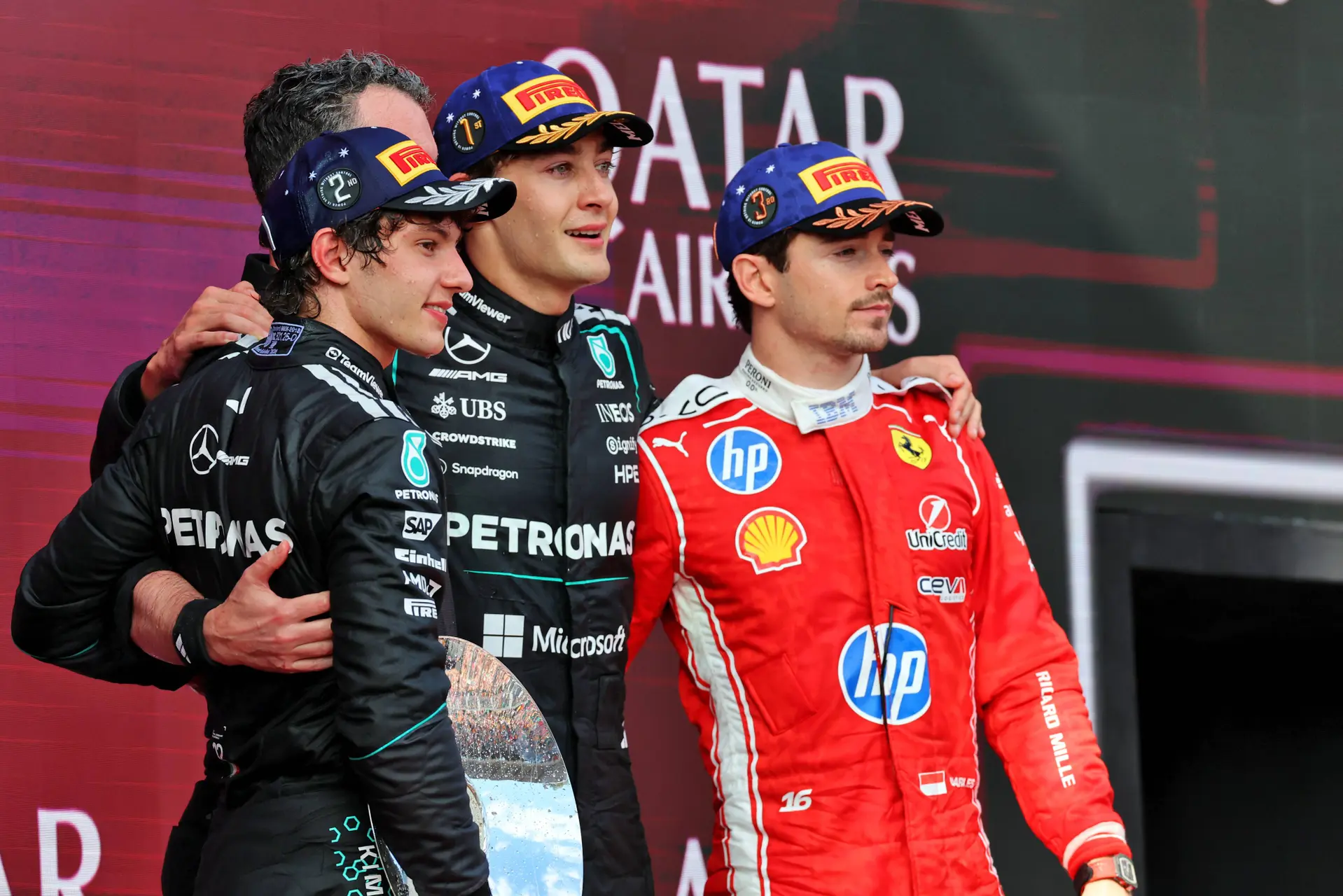
Photo: Race Pictures
Updated: 19:59, 08 Mar
12 Comments
Tobia is a Formula 1 journalist at GPblog with experience at international circuits. Since 2022, he has covered Grands Prix across Europe, delivering reliable coverage and insights from the paddock.
The Australian Grand Prix delivered plenty of spectacle despite widespread complaints from F1 drivers: just a collective illusion, or can the new regulations really deliver good racing?
The curtain has just fallen on the opening race of the 2026 season, one that had been eagerly anticipated by fans and insiders alike, with Formula 1 now officially entering a new era largely dominated by electrification.
Throughout the weekend, terms such as super clipping, energy management, deployment and lift and coast dominated the conversation, with much of the media focus centred on the shortcomings of the new regulations rather than the actual on-track action.
After yesterday’s qualifying session, the verdict seemed unanimous, with many describing this new regulatory cycle as something still very raw and far removed from what Formula 1 is supposed to be. However, the race appears to have at least partially reshuffled the deck, leaving public opinion far more divided. Here’s how the GPblog editorial staff reacted at the end of the first race weekend of the season.

Photo: Race Pictures
ADVERTISEMENT
Ben Hunt
Let's not get too carried just away. Yes the Australian GP was a fun watch, and it went some way to easing the concerns about this new generation of F1 car, but let's not be too hasty to toast it as a resounding success.
The start was a exciting and to have the lead change hands so many times in the opening few laps is a welcome addition. However, once the Mercedes advantage came into play, the race settled into a more-familiar rhythm. The acid test was never going to be Melbourne, but a longer-term assessment to see if the other teams can match Mercedes for performance. If they are able to, and we are able to replicate those exciting 10 laps for the duration of a GP, then this new generation of F1 will ultimately be hailed as a success.
Of course, purists will argue that the overtaking was a little false, but then, so too was DRS, and, we does it really matter? After all, sometimes in the past it was down to a driver’s skill or another's mistake.
F1 cares about ‘the show’, and for the first few laps it was great. But over the next few races, it is up to the opposing teams to extend those battles into the mid stages of the race. If they can do that, then I'm all in on this new generation of car.
ADVERTISEMENT
Tobia Elia
This new era of Formula 1 produced a real late surge today, with the race in Melbourne sparing the FIA and FOM from what would likely have been a wave of criticism - starting from the drivers and inevitably spilling over onto social media.
Let’s be clear: F1 is still far from its true DNA, and yesterday’s qualifying session made that painfully obvious. Watching George Russell effectively cruising through what should be the ultimate expression of speed in the sport - a pole lap - was hardly a pleasant sight. But the 58 laps around Albert Park did at least prove Tombazis and his colleagues right on one point: there was racing, and plenty of it.
Of course, one could argue that many of the overtakes were somewhat artificial, driven more by differences in battery deployment between the attacking and defending driver. Still, a sequence of passes and counter-passes for the race lead is something we haven’t seen in quite some time, and in that sense the new rules at least hit the mark.
The main priority now is ensuring that the electric component doesn’t run out too early over the course of a lap, and that the overtake mode doesn’t become too much of a Mario Kart-style mushroom boost, as Charles Leclerc and Max Verstappen have pointed out. All things considered, though, energy management did add an interesting strategic element to overtaking that was genuinely entertaining to watch.
ADVERTISEMENT

Photo: Race Pictures
Kada Sarkozi
The wheel-to-wheel battle between Russell and Leclerc stole the show in Australia, and rightly so. It was exciting, and it was also amplified by the fact that we haven’t seen racing since last December, even if it looks odd that suddenly drivers need to start “super clipping”, for example.
For now, I would say that it is not better or worse, it is just new, and we need more time to see whether this way of racing is exciting for us, even if it’s not for the drivers.
The key thing will be safety. What McLaren team boss Andrea Stella said during pre-season testing in Bahrain has really stuck with me: it is essential that we address issues for the better of the competition. Today, Franco Colapinto’s skills avoided a disastrous start. These things, like race starts, have to be dealt with as soon as possible, we can’t just wait for the first big incident to happen.
ADVERTISEMENT
Henry Eccles
A lot to like, but some serious concerns to address already. For me, prior to Melbourne, drivers not having it all their own way, and wackier overtaking, were exciting prospects, and that optimism seemed justified midway through the season opener. After all, who doesn’t enjoy seeing Mercedes and Ferrari knock seven bells out of each other across several laps?
We also saw tense battles between British youngsters Lindblad and Bearman, frenemies Gasly and Ocon, and even Lawson and Perez squabbling for P16. Yes, things may feel slightly ‘artificial' due to the incessant need to manage battery levels, and once teams did get on top of deployment, the second half did have a ‘false dawn’ feel - perhaps in that Ferrari vs Red Bull 2022 sort of way. But, ‘anti-racing’? Not just yet.
However, there are some genuinely worrying comments from drivers emerging. Post-race, Norris suggested erratic power delivery is a ‘horrible’ accident waiting to happen, while Sainz, previously a defender of the new rules, also raised concerns as Colapinto avoided a potentially serious accident with a sluggish Lawson at the start. We love that F1 is a circus, but never at the expense of driver safety.
ADVERTISEMENT
Read also
GPblog's latest F1 Paddock Update
Want to stay up-to-date with what happens in the F1 paddock? Then GPblog's F1 Paddock Update video is the perfect way to do it. Subscribe to GPblog's YouTube channel and turn on notifications to never miss the latest episodes.
Don’t miss GPblog in Google
Mark us as a preferred source and our articles will appear more often at the top of Top Stories.
Add as a preferred / source on GoogleRead more about:
latest news

Spanish Grand Prix
Overview
Friday 11.09.26
Practice 1
11:30 AM
Practice 2
03:00 PM
Saturday 12.09.26
Practice 3
10:30 AM
Qualification
02:00 PM
Sunday 13.09.26
Race
01:00 PM
Friday 11.09.26
Practice 1
Fri 11:30 AM
Practice 2
Fri 03:00 PM
Saturday 12.09.26
Practice 3
Sat 10:30 AM
Qualification
Sat 02:00 PM
Sunday 13.09.26
Race
Sun 01:00 PM
Times are in your local timezone
Popular on GPBlog
1
Verstappen sees Tsunoda and Lawson as proof of wider F1 issue: 'No disrespect, but...'
18707 times read
2
F1 Today | Robin Raikkonen enters Red Bull ranks as Verstappen confirms Mercedes and McLaren talks
1845 times read
3
Russell given brutal verdict after Antonelli Monza defeat: 'It's embarrassing'
1524 times read
4
Elkann puts Vasseur 'under observation' as Italian press questions Ferrari's leadership after Monza
719 times read
F1-stand 2026
Season
| Pos. | Driver | Team | Points |
|---|---|---|---|
1 | MercedesMER | 267 | |
2 | MercedesMER | 201 | |
3 | FerrariFER | 191 | |
4 | McLarenMCL | 171 | |
5 | FerrariFER | 155 | |
6 | Red Bull RacingRBR | 127 | |
7 | McLarenMCL | 116 | |
8 | Red Bull RacingRBR | 71 | |
9 | Racing BullsRCB | 51 | |
10 | AlpineALP | 41 |
Loading