Hamilton ‘can’t quite grasp’ Ferrari problem as he highlights ‘crazy’ Baku deficit

Photo: Race Pictures
20:06, 26 Sep
3 Comments

Kieran is a freelance Formula 1 journalist for GPblog, covering breaking news, live race blogs and feature content across the F1 calendar. An NQJ-qualified journalist with more than a decade of experience, he has previously written for publications including MailOnline, the Manchester Evening News and the Eastern Daily Press.
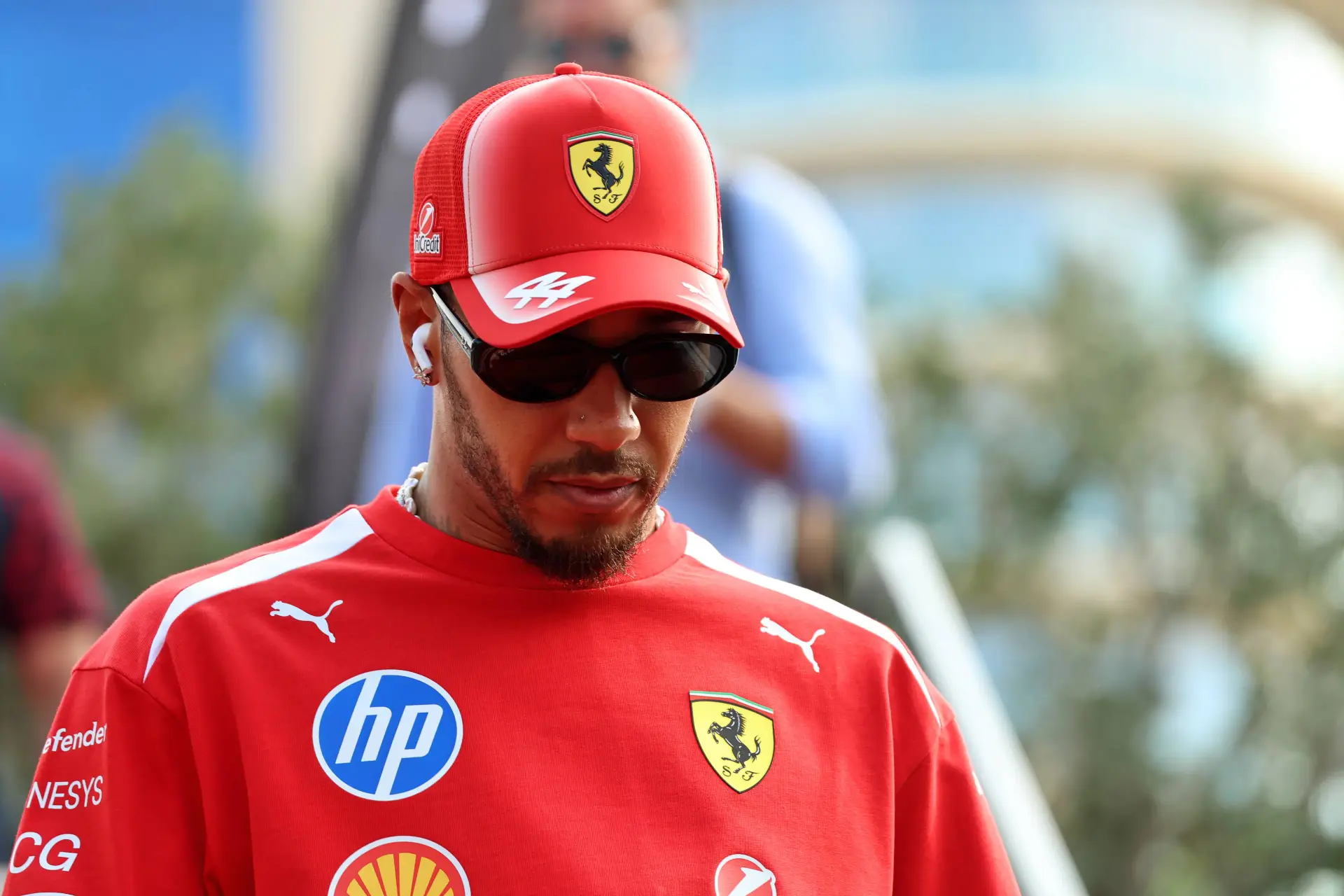
Lewis Hamilton has admitted he cannot understand why Ferrari struggled so badly to get its tyres working at the Azerbaijan Grand Prix, while also describing the power advantage of rival teams as “pretty crazy”.
The seven-time world champion endured a difficult weekend in Baku, repeatedly struggling to bring his tyres into the right operating window, finishing the race in sixth.
“For me, all weekend, it was switching the tyres on,” Hamilton explained after the race to the media, including GPblog. “Just all weekend, I don’t think I ever really got the tyres to switch on. And I can’t quite grasp why that is the case with our car.”
Ferrari made changes in an attempt to improve the situation, with Hamilton feeling the issue was slightly better in final practice. However, he said the problem returned in qualifying and continued into the race.
“It was a bit better in P3, and then into qualifying it was a real struggle to switch them on,” he said. “At the end of the first stint, I had the tyres all of a sudden switched on and I had okay pace. But then we got onto the medium tyre and they just wouldn’t work the whole time.”
ADVERTISEMENT
Hamilton highlights ‘crazy’ power deficit
Hamilton also pointed to the deployment advantage enjoyed by Ferrari’s rivals around the Baku City Circuit, explaining that it made defending into several corners far more difficult than usual.
“These guys just seem to just power, power, power everywhere, which is pretty crazy to see,” Hamilton said.
“You’re having to block into places that you would not normally have to, like Turn 2 or Turn 4 or 5.”
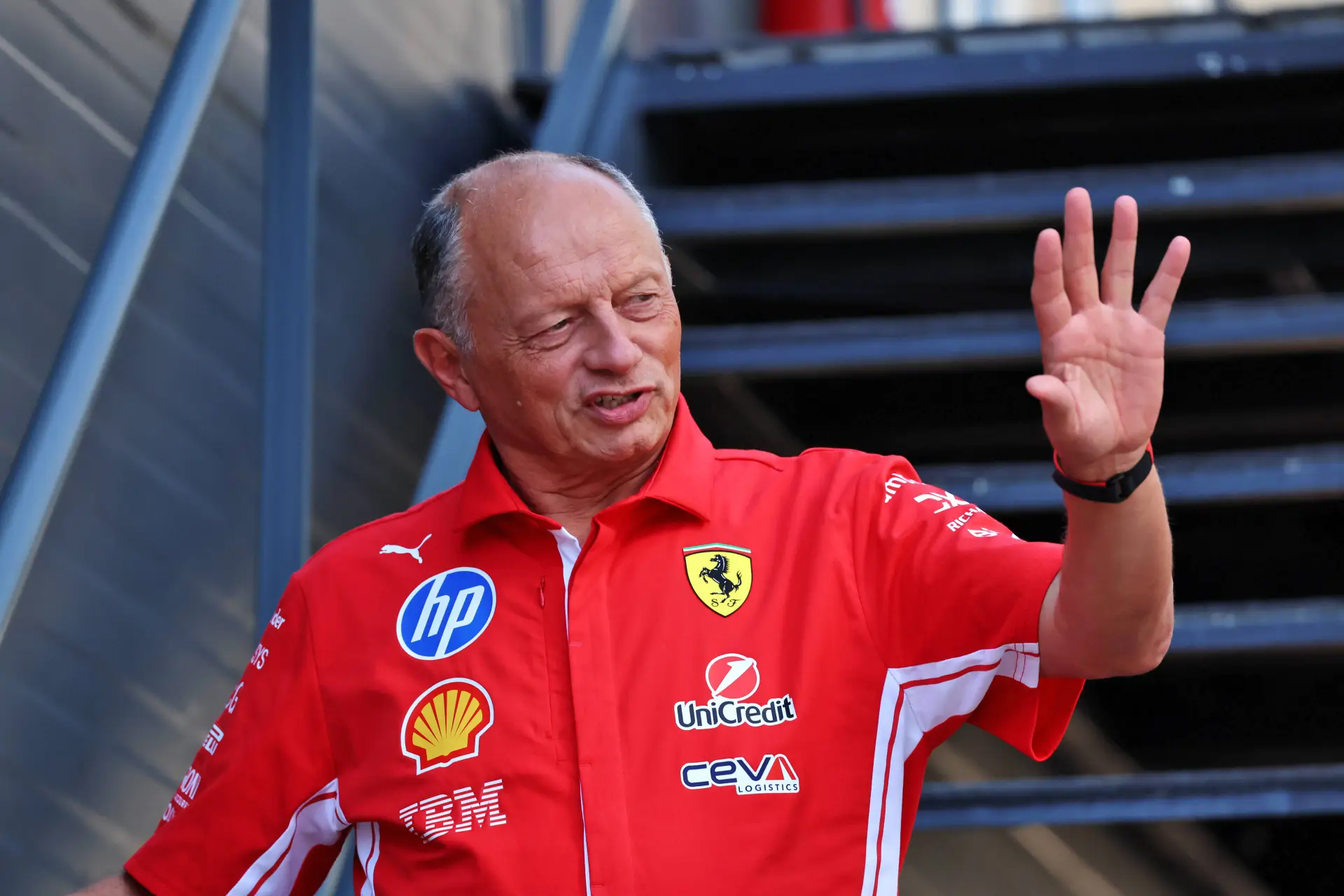
Meanwhile, Hamilton responded to speculation linking Christian Horner to Ferrari as a potential replacement for current team principal Fred Vasseur.
ADVERTISEMENT
With Ferrari under growing pressure after going five consecutive races without a podium, Hamilton was asked by Sky Sports whether he still considers Vasseur the right person to lead the team. Amid renewed speculation linking Horner with a potential move to Maranello, the seven-time world champion responded with a simple and unequivocal “Yes”.

Don’t miss GPblog in Google
Mark us as a preferred source and our articles will appear more often at the top of Top Stories.
Add as a preferred / source on GoogleRead more about:
latest news




Bahrain Grand Prix
Overview
Friday 02.10.26
Practice 1
04:30 AM
Practice 2
08:00 AM
Saturday 03.10.26
Practice 3
04:30 AM
Qualification
08:00 AM
Sunday 04.10.26
Race
07:00 AM
Friday 02.10.26
Practice 1
Fri 04:30 AM
Practice 2
Fri 08:00 AM
Saturday 03.10.26
Practice 3
Sat 04:30 AM
Qualification
Sat 08:00 AM
Sunday 04.10.26
Race
Sun 07:00 AM
Times are in your local timezone
Rumors
Popular on GPBlog

1
F1 Today | Russell takes monster Baku pole as Horner makes bold Ferrari admission
6695 times read

2
F1 Standings | Antonelli recovers but Russell and Red Bull score big at Azerbaijan GP
1341 times read
3
F1 LIVE | Russell pips Verstappen to victory - Follow the 2026 Azerbaijan GP here!
1175 times read

4
FIA reaches verdict on Hadjar as rival is hit with time penalty
1167 times read
F1-stand 2026
Season
| Pos. | Driver | Team | Points |
|---|---|---|---|
1 | MercedesMER | 302 | |
2 | MercedesMER | 236 | |
3 | FerrariFER | 199 | |
4 | McLarenMCL | 186 | |
5 | FerrariFER | 179 | |
6 | Red Bull RacingRBR | 163 | |
7 | McLarenMCL | 120 | |
8 | Red Bull RacingRBR | 86 | |
9 | Racing BullsRCB | 59 | |
10 | AlpineALP | 41 |
Loading