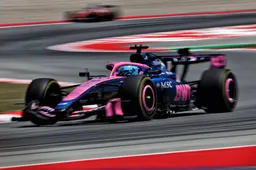
Verstappen gathers more long-run data with clever approach; Mercedes still frighteningly fast
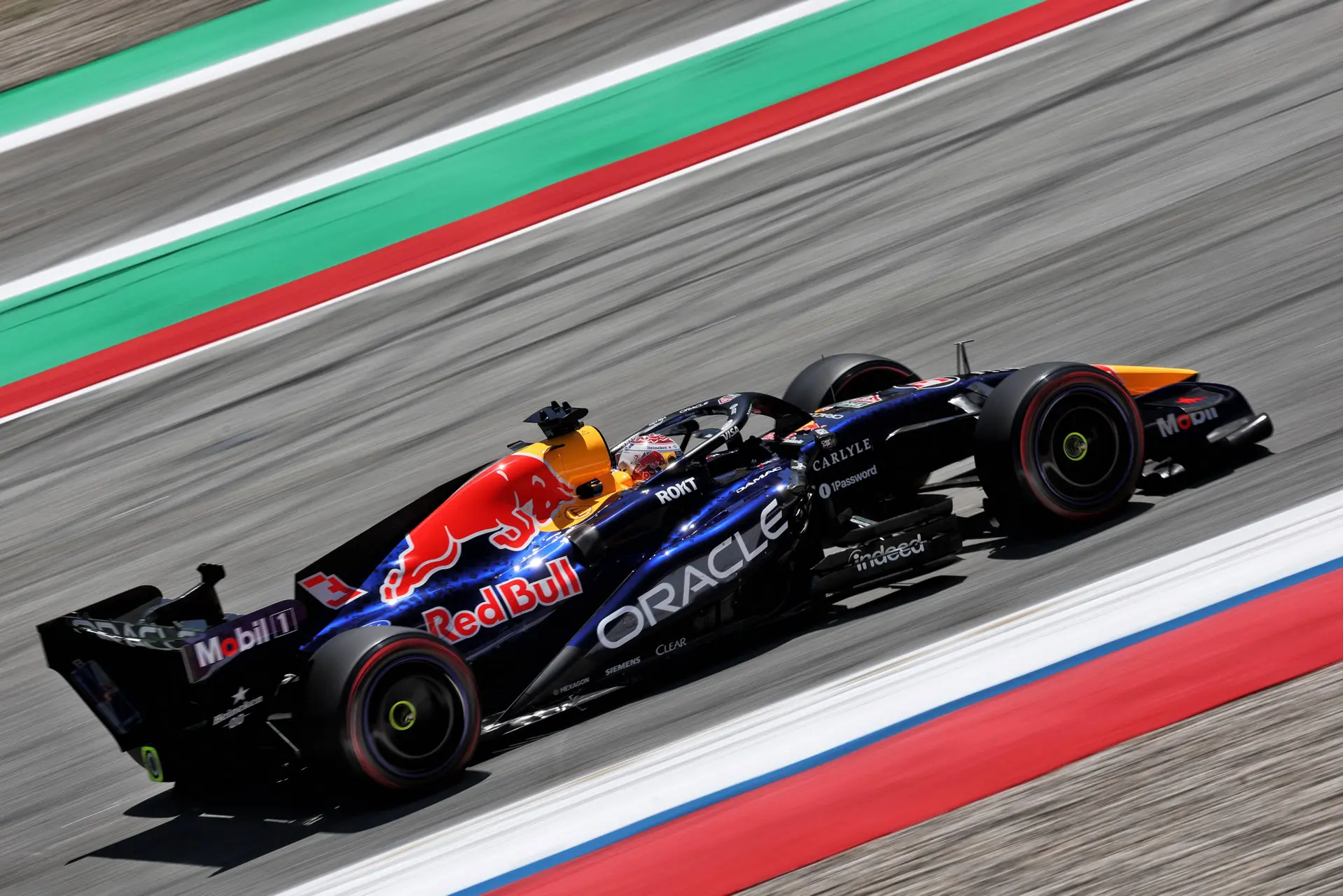
Photo: Race Pictures

Shanna is a Formula 1 journalist at GPblog, specializing in both F1 and endurance and GT racing. With a Master’s degree in Journalism and experience at international circuits, she provides in-depth, reliable coverage and insights based on her presence at Grands Prix and racing events worldwide.
Red Bull Racing had plenty of work to do during the second free practice. Max Verstappen was actually unhappy with the car’s handling all Friday, which meant an extensive program was lined up for both drivers to work through. Red Bull managed to get a lot done and was the only team to run this specific program.
Verstappen and Isack Hadjar ran all three compounds that Pirelli provided in Barcelona during the sixty minutes of FP2. The four-time world champion was even the only one to do long runs on the hard tyre this Friday, allowing Red Bull to gather more data in that area at least. In the morning, rookie Ayumu Iwasa got seat time, which made Hadjar's job in FP2 a little trickier.
As is customary with long runs, we have to keep in mind that we don’t know which engine modes and fuel loads the teams are using. Temperatures also play a role in Barcelona. FP2 was held at a time of day when qualifying will not take place on Saturday, and the race will start two hours earlier on Sunday than free practice did on Friday. Even so, rhythm and consistency can still be meaningful for Grand Prix day in Spain.

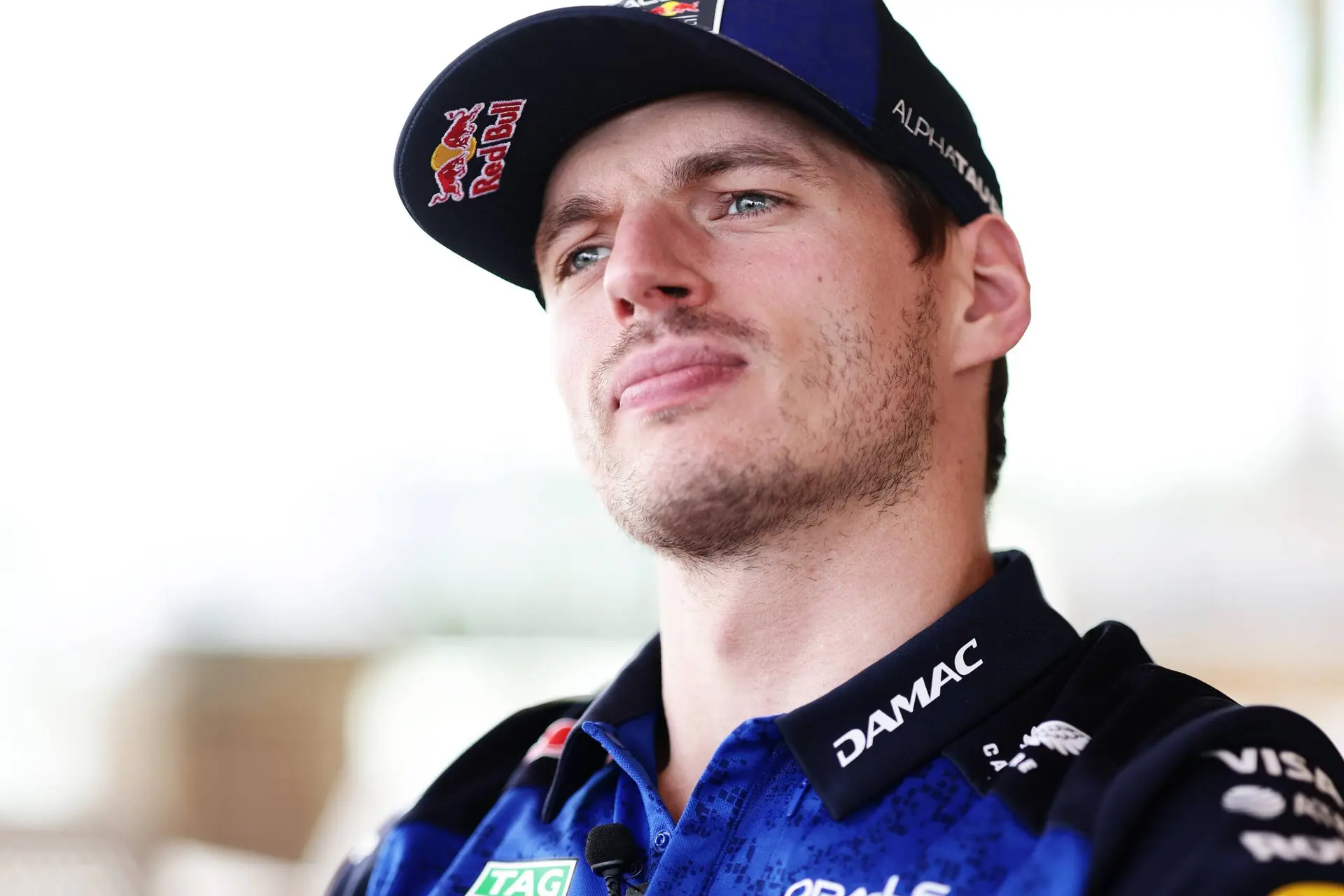
Max Verstappen during the Barcelona Grand Prix Practice - Photo: Race Pictures
Red Bull’s deficit on softs is very large
ADVERTISEMENT
On Friday, Mercedes and Red Bull were the only two top teams to put their drivers to work on different compounds. The German outfit split the workload for Kimi Antonelli and George Russell across the soft and the medium. They didn’t run the same compound at the same time, but swapped in the second phase of the session to gather data at different points during practice. Red Bull actually came up short against Mercedes in all stints.
| Lap | VER LR1 (H) | HAD (M) | ANT LR1 (S) | RUS LR1 (M) |
| 1 | 1:21.431 | 1:22.059 | 1:21.117 | 1:21.114 |
| 2 | 1:21.161 | 1:22.781 | 1:20.801 | 1:20.746 |
| 3 | 1:21.094 | 1:23.370 | 1:21.247 | 1:20.915 |
| 4 | 1:21.517 | 1:23.043 | 1:21.193 | 1:21.252 |
| 5 | 1:21.850 | 1:23.750 | 1:21.431 | 1:21.509 |
| 6 | 1:21.760 | x | x | 1:21.871 |
| 7 | x | 1:23.404 | 1:22.061 | 1:22.177 |
| 8 | 1:22.540 | x | 1:22.984 | |
| 9 | 1:22.533 | 1:22.122 | 1:23.523 | |
| 10 | 1:23.312 | |||
| Average | 1:21.911 | 1:23.068 | 1:21.425 | 1:21.788 |
| Lap | VER LR2 (S) | ANT LR2 (M) | RUS LR2 (S) | |
| 1 | 1:22.454 | 1:21.136 | 1:21.020 | |
| 2 | 1:21.354 | 1:21.034 | 1:20.943 | |
| 3 | 1:21.388 | 1:23.034 | 1:21.203 | |
| 4 | 1:21.217 | 1:21.614 | ||
| 5 | 1:21.656 | |||
| 6 | 1:21.538 | |||
| 7 | 1:22.059 | |||
| 8 | 1:22.116 | |||
| 9 | 1:22.584 | |||
| Average | 1:21.818 | 1:21.735 | 1:21.195 |
Antonelli set the benchmark on the soft tire with an average of 1:21.735 — albeit on a very short stint — while Russell averaged 1:21.788. Those two are remarkably close. On the softs, Russell is currently also faster than Antonelli. He averaged 1:21.195 there, with Antonelli roughly three tenths behind. Russell did run the softs toward the end of the session, where track evolution also plays a role.
Verstappen was the only one among the top teams to do a stint on the hard tyre. With his 1:21.911 average, he wasn’t too far behind Russell and Antonelli on the mediums — a little under two tenths. On the soft tyre, the deficit is significant: an average of 1:21.818 versus Russell’s 1:21.195. Hadjar ran on the mediums and averaged 1:23.068 — so his gap is even larger than Verstappen’s.
ADVERTISEMENT
Where McLaren and Ferrari fit in
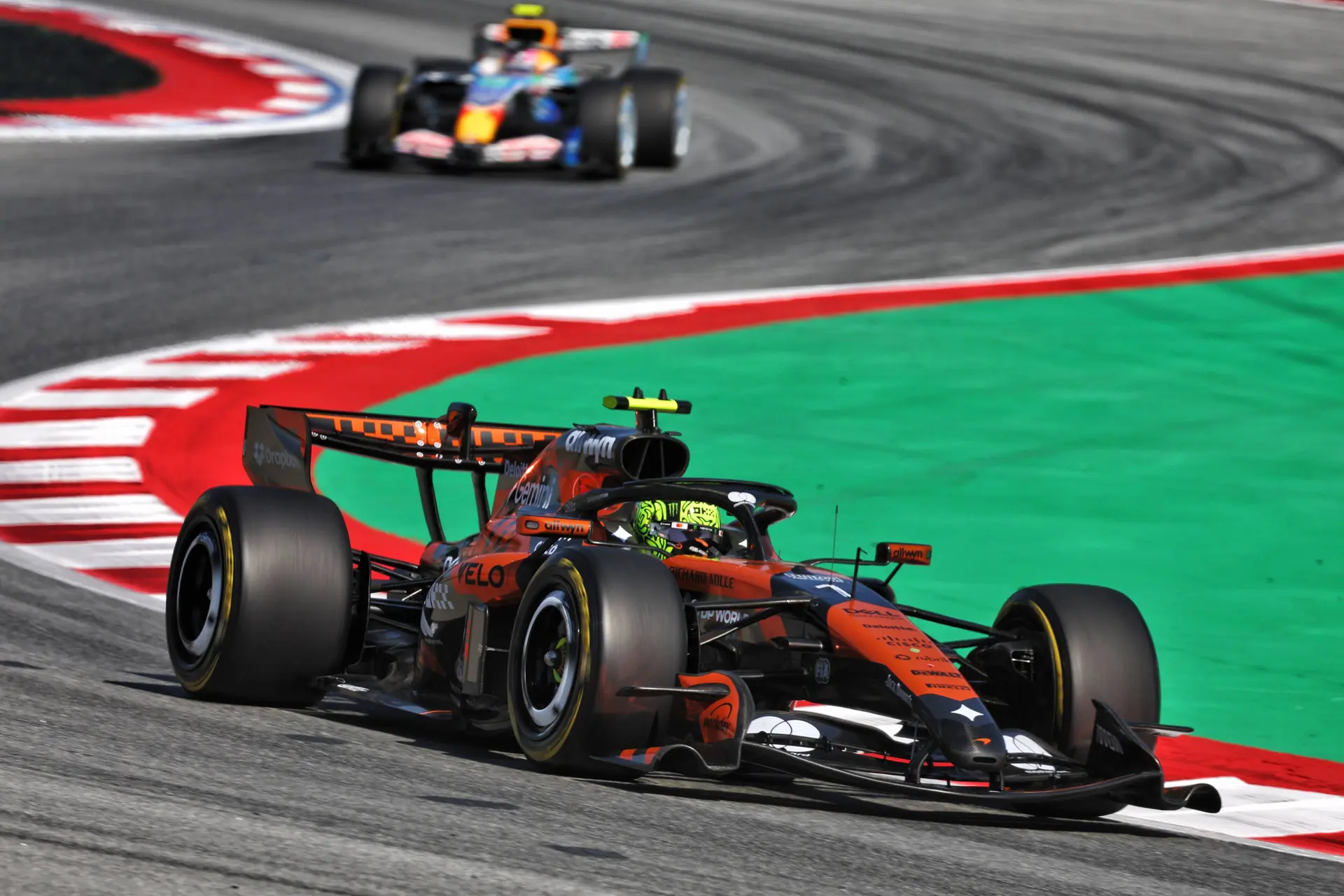
McLaren and Ferrari took a different approach from Red Bull and Mercedes. The British team split strategy across its two drivers, with Oscar Piastri doing the long run on mediums and Lando Norris on softs. At Ferrari, both drivers ran the medium tyre. On every compound they used, they too came up short compared to Mercedes.
| Lap | PIA (M) | NOR (S) | HAM (M) | LEC (M) |
| 1 | 1:21.581 | 1:21.107 | 1:22.025 | 1:21.165 |
| 2 | 1:22.368 | 1:21.521 | 1:1 262 | 1:20.994 |
| 3 | 1:22.244 | 1:21.549 | 1:23.778 | 1:20.865 |
| 4 | 1:22.692 | 1:21.638 | 1:22.687 | 1:21.680 |
| 5 | x | 1:21.739 | 1:23.191 | 1:22.905 |
| 6 | 1:22.782 | x | 1:22.620 | 1:22.122 |
| 7 | 1:22.350 | 1:22.981 | 1:22.143 | |
| 8 | 1:22.613 | |||
| 9 | 1:23.083 | |||
| Average | 1:22.336 | 1:22.029 | 1:22.594 | 1:21.969 |
The stint most comparable to Verstappen’s is Norris’s, who also ran the soft tire in the second half of the session. The Brit averaged 1:22.029, while Verstappen was about two tenths quicker there with an average of 1:21.818. The deficit to Russell’s stint, however, remains significant and close to a second. Piastri — who was on the mediums — was a further three tenths slower than Norris and comes up about six tenths short compared to Antonelli’s and Russell’s medium stints.
Of the Ferrari duo, Leclerc was clearly the faster man on the mediums, averaging 1:21.969. He’s also closest to the Mercedes pair, about two tenths off Antonelli and Russell. While Verstappen ran a harder compound, his stint on the hard tire was just slightly quicker than Leclerc’s. For now, it seems Red Bull’s race pace isn’t in too bad a place, especially compared to McLaren and Ferrari, but the big question for Sunday is how tire degradation will play out and how the car behaves when it’s heavier with fuel.
ADVERTISEMENT
Read also

Don’t miss GPblog in Google
Mark us as a preferred source and our articles will appear more often at the top of Top Stories.
Add as a preferred / source on Google