McLaren brings back a piece of its past in new brand identity revamp
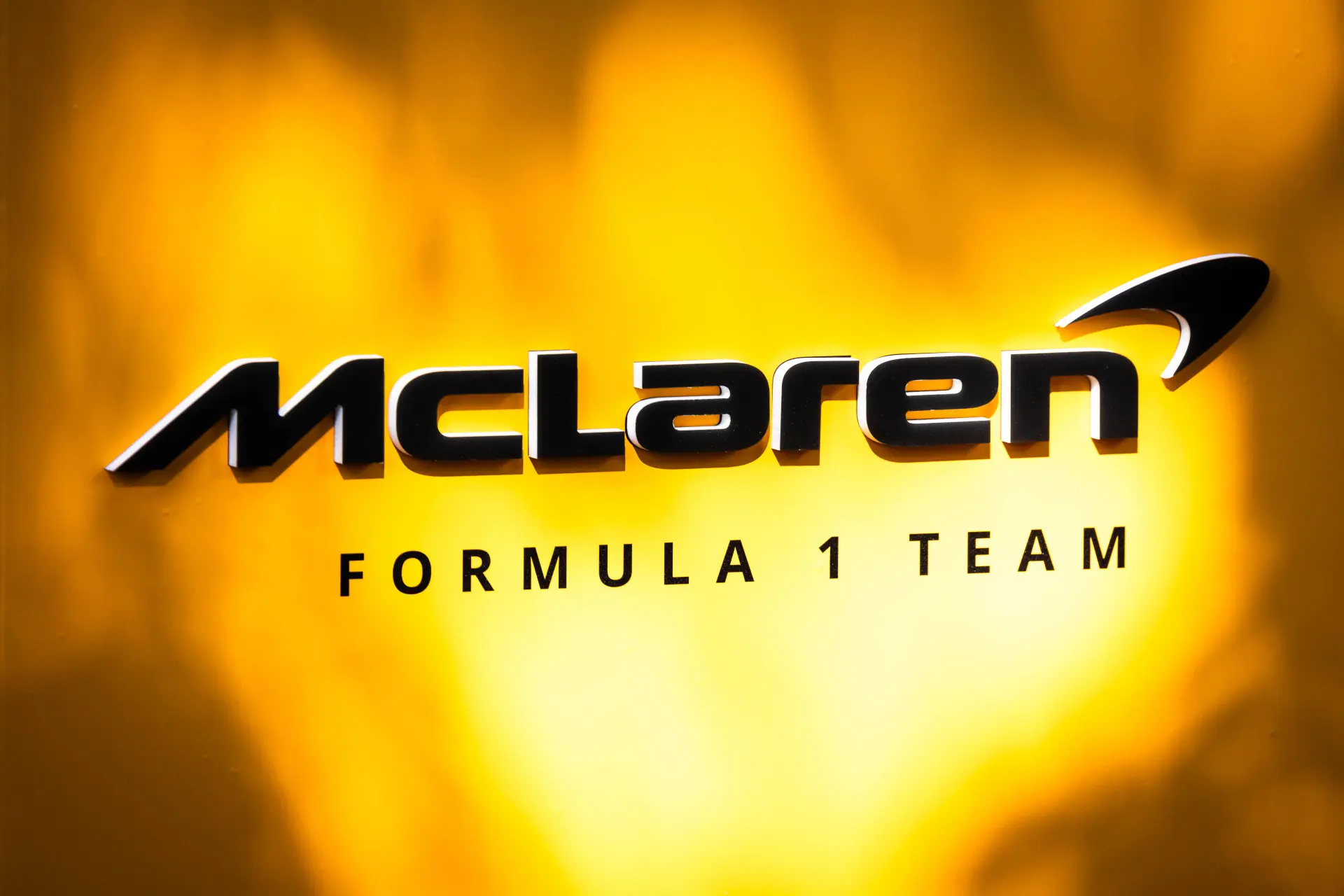
Photo: Race Pictures
15:30, 22 Sep
0 Comments
Tobia is a Formula 1 journalist at GPblog with experience at international circuits. Since 2022, he has covered Grands Prix across Europe, delivering reliable coverage and insights from the paddock.
McLaren has unveiled a refreshed identity as part of the brand’s latest evolution, bringing its automotive and racing operations closer together while drawing on its heritage and looking towards the future.
The main change introduced by McLaren’s new brand identity is the ‘McLaren’ wordmark, inspired by the signage of the McLaren family’s service station in Remuera, Auckland, where Bruce McLaren built the car that secured his first victory. This location holds particular significance in the company’s history, as it was where Bruce McLaren built the car that delivered his first victory.
The iconic Speedmark, however, is being retained, ensuring that one of the most recognisable elements of McLaren’s visual identity remains in place rather than being replaced altogether.
Papaya will continue to serve as McLaren’s primary colour, but the new identity expands the palette with additional colours inspired by different periods in the company’s history. This gives McLaren greater flexibility in how its visual identity is used across its various activities. The Speedy Kiwi also remains part of the brand, preserving an important connection to Bruce McLaren’s New Zealand roots and the origins of the company.
ADVERTISEMENT
David Woodhouse, Chief Creative Officer at McLaren Automotive, explained that the brand has always been defined by a willingness to challenge convention and pursue new ideas rather than simply follow established trends.
He described the updated visual identity as a reflection of that mindset, representing McLaren’s continued evolution and providing a new expression of its ambition, creativity and determination to move forward.
"There is something uniquely special about McLaren. Throughout our history, we've never been content to follow established paths. We've always looked ahead, driven by a restless desire to innovate, create and push beyond expectations. This evolution of our visual identity captures that spirit. It's a reflection of the journey we are on as a company. It marks the beginning of a new chapter for McLaren, giving a physical expression to the ambition, creativity and forward momentum that is shaping our future."
Lou McEwen, Chief Marketing Officer at McLaren Racing, highlighted how the company’s long history across both Racing and Automotive continues to be shaped by Bruce McLaren’s original vision. She said the refreshed identity is intended to connect that heritage with McLaren’s future ambitions, retaining familiar symbols and elements that resonate with fans, partners and employees while creating a more unified expression of the brand’s direction.
ADVERTISEMENT
"McLaren has evolved enormously over the years, but looking back through our shared history across Racing and Automotive, it’s poignant how much of Bruce's original vision and spirit still runs through the business today. This evolved identity perfectly bridges that proud heritage with our future ambition. It celebrates the symbols and stories our fans, partners and team mates already know and love, while giving us a more connected expression of where we’re heading next. It feels unmistakeably McLaren."
McLaren brings biggest Baku upgrade as Marshall predicts four-way battle for victory
McLaren heads to Baku with its most significant upgrade package of the second half of the season, as the team looks to improve the MCL40 with a new floor, fresh aerodynamic components and the return of its rotating ‘Macarena’ H-Wing.
The new floor is primarily aimed at improving aerodynamic efficiency and addressing one of the MCL40’s weaknesses in slower corners. McLaren will also introduce an updated version of its ‘Macarena’-style H-Wing. The rotating rear-wing concept was removed in Madrid because that specification was not suited to the required downforce level. For Baku, McLaren has developed a version designed for a slightly higher-downforce range, although the circuit’s exceptionally long straight could still lead the team to revert to the flatter Monza specification for the race.
McLaren Chief Technical Officer Rob Marshall admitted that the team has not always been able to accurately predict its performance level this season. He explained that the team continues to learn about the current generation of cars at every event, with the MCL40 having both exceeded and fallen short of expectations at different races throughout the year.
ADVERTISEMENT
Marshall also highlighted the unique challenge presented by the Baku City Circuit, with the Azerbaijan Grand Prix combining Formula 1’s longest straight with some of its slowest corners, creating significant compromises for teams to manage.
Don’t miss GPblog in Google
Mark us as a preferred source and our articles will appear more often at the top of Top Stories.
Add as a preferred / source on GoogleRead more about:
latest news
Azerbaijan Grand Prix
Overview
Thursday 24.09.26
Practice 1
08:30 AM
Practice 2
12:00 PM
Friday 25.09.26
Practice 3
08:30 AM
Qualification
12:00 PM
Saturday 26.09.26
Race
11:00 AM
Thursday 24.09.26
Practice 1
Thu 08:30 AM
Practice 2
Thu 12:00 PM
Friday 25.09.26
Practice 3
Fri 08:30 AM
Qualification
Fri 12:00 PM
Saturday 26.09.26
Race
Sat 11:00 AM
Times are in your local timezone
Rumors
Popular on GPBlog
1
F1 Today: Ferrari reveal Hamilton plan as another race abandons UAE
2989 times read
2
Formula 1 confirms major decision: races will be shorter from 2027
1259 times read
3
'Former Lotus F1 boss facing trial with five-year maximum penalty'
951 times read
4
Red Bull to make last minute Isack Hadjar call at Azerbaijan Grand Prix
796 times read
F1-stand 2026
Season
| Pos. | Driver | Team | Points |
|---|---|---|---|
1 | MercedesMER | 292 | |
2 | MercedesMER | 211 | |
3 | FerrariFER | 191 | |
4 | McLarenMCL | 186 | |
5 | FerrariFER | 167 | |
6 | Red Bull RacingRBR | 145 | |
7 | McLarenMCL | 120 | |
8 | Red Bull RacingRBR | 71 | |
9 | Racing BullsRCB | 59 | |
10 | AlpineALP | 41 |
Loading