MotoGP confirms major technical rule change from Dutch Grand Prix
Updated: 18:01, 22 Jun
1 Comments
Connor Andrews is Formula 1 and MotoGP writer for GPblog and various outlets. Having worked in motorsport for 15 years for leading companies, he has interviewed the sports biggest names and attended multiple Grands Prix.
MotoGP has announced a major technical shake-up, with ride-height devices banned from this weekend's Dutch Grand Prix and further safety changes set to follow.
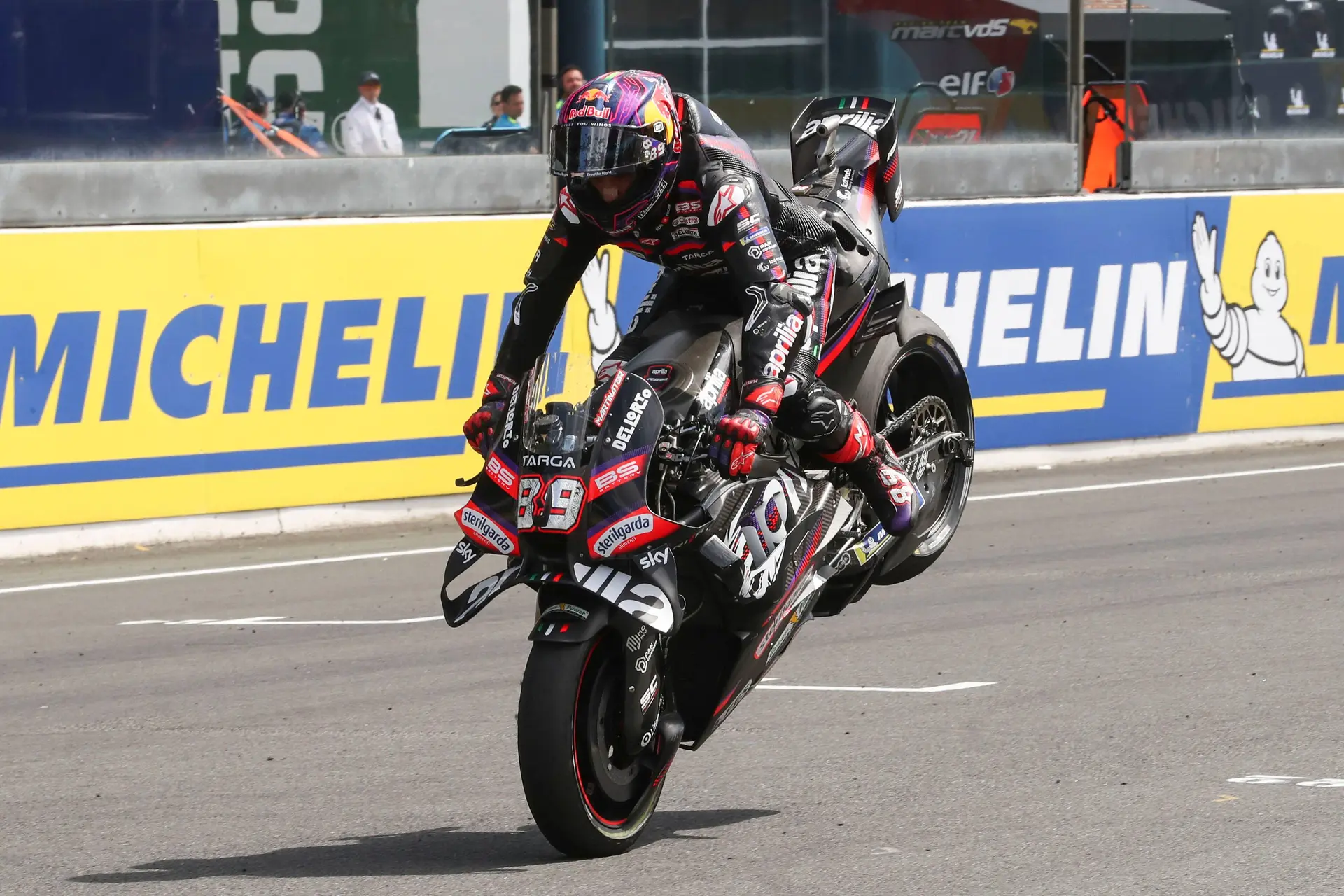
The most immediate change is the banning of ride height devices which have come under increased scrutiny due to a number of turn one crashes in 2026 and were already due to be banned in 2027.
MotoGP bans front ride-height devices
The 'holeshot device', which helps riders maximise acceleration off the line, will be removed from all bikes from this weekend's Dutch Grand Prix at Assen.
A statement from the commission read:
“Front Ride Height devices – known as holeshot devices – will be removed from all MotoGP machines from the Dutch Grand Prix onwards. This follows consultation with all MotoGP teams and after riders have had the opportunity to test their starts in extra Practice Start sessions.”
ADVERTISEMENT
Grid spacing increased for safety reasons
In a further response to first corner accidents, grid spacing will also be increased in the following German Grand Prix. There were rumours of a switch to two-by-two grid slots, like Formula 1 and four-wheeled events, but the three-person slots will remain:
“To further increase safety at race starts, the standard grid layout for all classes will be adjusted from the 2026 German Grand Prix onwards. The current vertical spacing between rows of riders is three metres and will be increased to four metres, extending the distance between each three-rider row from nine to 12 metres. Three riders will remain on each row.”

This is how grid slots will look from Germany onwards (Credit: MotoGP)
The two changes to race starts come after high-profile incidents in Catalunya and Hungary. In Barcelona the race was restarted after an Alex Marquez crash, and upon the restart Johann Zarco tangled with Francesco Bagnaia and got his leg caught under his rival's Ducati. Zarco was then dragged along the tarmac and is still awaiting ligament surgery over a month later due to the burns.
ADVERTISEMENT
At Balaton Park two races later there was then another turn one incident when 2024 champion Jorge Martin lost control of his bike. He took out Aprilia teammate Marco Bezzecchi, Fermin Aldeguer, Raul Fernandez and Fabio Di Giannantonio, with only the last of those able to continue.

The hope is for more space and therefore fewer first corner crashes (Credit: Red Bull Content Pool)
Di Giannantonio was particularly critical after the event:
"We were lucky because I've been told that everyone is okay. But there's a 150-160kg motorcycle going full throttle... that can kill you. So honestly, I don't understand how these things still happen.
"It surely could have been avoided. I don't understand how things like this keep happening when we've seen and experienced incredible accidents. Even so, we still have that desire to take such big risks. Sure, you can win, but you can also lose a lot."
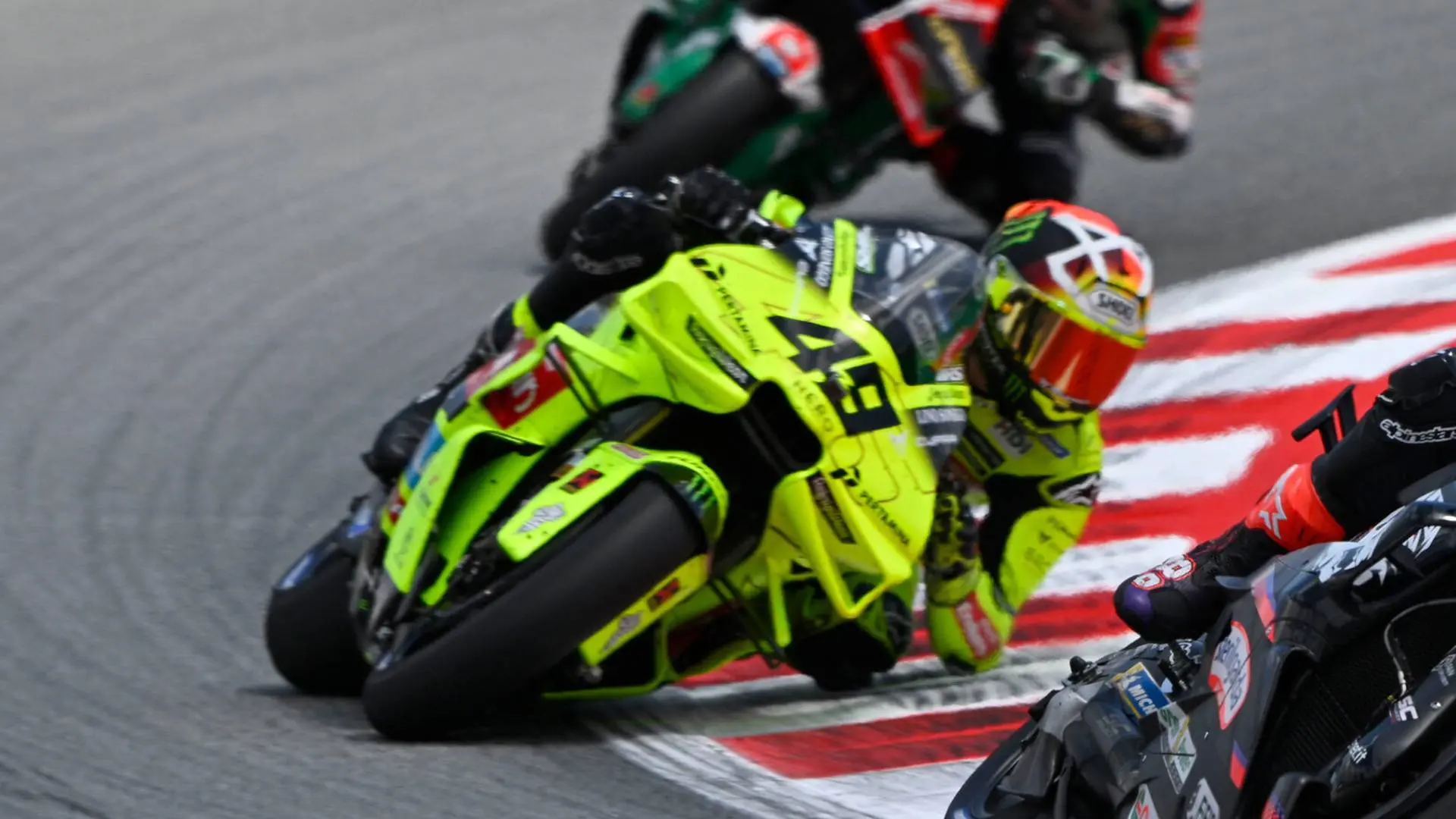
Riders had the opportunity to practice race starts without ride height devices on Friday in Brno, but not everyone was happy, particularly KTM's Pedro Acosta.
ADVERTISEMENT
“I think it's even more dangerous."- Acosta
New manufacturer limit introduced for 2028
In a further long-term update, manufacturers will be able to field a maximum of six riders from 2028 onwards:
“From 2028, there will be a maximum limit of six riders who are permitted to use machinery from the same manufacturer in MotoGP, effectively meaning that manufacturers will be able to supply a maximum of two teams in addition to their own. This is under the condition that there are at least five manufacturers competing in the Championship at that time.”
ADVERTISEMENT
Ducati are currently the only manufactuerer with six bikes on the grid across their Ducati Lenovo factory team and Gresini and VR46 satellite team.
Don’t miss GPblog in Google
Mark us as a preferred source and our articles will appear more often at the top of Top Stories.
Add as a preferred / source on GoogleRead more about:
latest news
Azerbaijan Grand Prix
Overview
Thursday 24.09.26
Practice 1
08:30 AM
Practice 2
12:00 PM
Friday 25.09.26
Practice 3
08:30 AM
Qualification
12:00 PM
Saturday 26.09.26
Race
11:00 AM
Thursday 24.09.26
Practice 1
Thu 08:30 AM
Practice 2
Thu 12:00 PM
Friday 25.09.26
Practice 3
Fri 08:30 AM
Qualification
Fri 12:00 PM
Saturday 26.09.26
Race
Sat 11:00 AM
Times are in your local timezone
Rumors
Popular on GPBlog
1
Nico Rosberg questions Red Bull driver as Laurent Mekies hits back
1981 times read
2
F1 Today: Ferrari reveal Hamilton plan as another race abandons UAE
1132 times read
3
The cost of cancelling F1 races in the Middle East as the sport tries to go ahead as planned
1036 times read
4
Formula 1 confirms major decision: races will be shorter from 2027
867 times read
F1-stand 2026
Season
| Pos. | Driver | Team | Points |
|---|---|---|---|
1 | MercedesMER | 292 | |
2 | MercedesMER | 211 | |
3 | FerrariFER | 191 | |
4 | McLarenMCL | 186 | |
5 | FerrariFER | 167 | |
6 | Red Bull RacingRBR | 145 | |
7 | McLarenMCL | 120 | |
8 | Red Bull RacingRBR | 71 | |
9 | Racing BullsRCB | 59 | |
10 | AlpineALP | 41 |
Loading