Formula 1
Formula 1 is the highest class in motorsport for so-called single-seaters. The series, often referred to as the pinnacle of motorsport, dates back to 1950 and has officially been the FIA Formula 1 World Championship since 1981. Lando Norris is the reigning drivers’ world champion, while McLaren holds the constructors’ title.
Formula 1 in 2026
Formula 1 has entered a completely new era in 2026, with a full overhaul of the technical regulations. Both the chassis and the power units have been redesigned. In December 2025, Formula 1 officially revealed what the new generation of cars would look like and what changes were introduced.
The new cars are lighter and slightly smaller. The minimum weight has been reduced by 30 kilograms and the cars have been made narrower in several areas. Downforce has been reduced by 15 to 30 percent, while drag has been cut by as much as 40 percent. The DRS system has been removed and replaced by active aerodynamics, and the tyres have also been made narrower.
The power unit has also been updated. The new engine consists of 50 percent internal combustion and 50 percent electric power, running on sustainable fuel. According to Formula 1, this fuel does not impact performance. The MGU-H has been removed, while the MGU-K has been made more powerful, which should result in higher top speeds.
Mercedes dominates start of 2026 F1 season
Mercedes made a dominant start to the 2026 season. In Australia, the team secured a one-two finish in both qualifying and the race. Max Verstappen had to fight his way through the field after starting from the back and eventually finished sixth in Melbourne.
The race in Shanghai was also defined by Mercedes dominance. Andrea Kimi Antonelli started from pole position and, despite losing the lead at the start, regained control of the race and secured his first Formula 1 victory. George Russell completed a one-two finish, while Lewis Hamilton gave Ferrari a podium result. Behind them, there were several midfield battles and multiple retirements, making the race more unpredictable. Verstappen retired.
At Suzuka, Antonelli continued his strong form by taking his second consecutive victory and moving into the championship lead. The race featured a major crash involving Oliver Bearman, which brought out the safety car. After the restart, Antonelli maintained control, finishing ahead of Oscar Piastri and Charles Leclerc. Strategy and tyre wear played a key role, while the new regulations were once again a topic of discussion. Verstappen finished eighth in Japan.
Although the next race in Miami would follow a similar trend, with another Antonelli victory, it wasn’t without the McLaren team being constantly in the mix. Lando Norris claimed pole position and victory in the Sprint race, while Antonelli replicated the same feat in the Grand Prix after holding off Norris in a freshly upgraded McLaren for much of the race distance. Verstappen finished the race in fifth place.
At the Canadian Grand Prix, with the Mercedes outfit introducing their first major update to their 2026 car, the Brackley-based team were largely untouchable throughout the weekend. Russell topped every competitive session on the timing sheets through the Sprint segment at the Circuit Gilles Villeneuve, and the British driver, who had claimed pole, had largely fended off his charging teammate Antonelli until lap 30, when he suffered a power unit issue. Antonelli subsequently clinched victory ahead of Lewis Hamilton, with Verstappen securing his first podium finish of the season as well.
In Monaco, Kimi Antonelli claimed his fifth consecutive victory, finishing ahead of Lewis Hamilton and Pierre Gasly. The Frenchman's third-place finish was initially taken away when a 10-second penalty was added to his time, but the stewards later reinstated him to the podium following Alpine's successful Right of Review. As a result, Red Bull Racing, with Isack Hadjar dropping to fourth, and McLaren, with Oscar Piastri relegated to fifth, formally lodged a notification of appeal with the FIA International Court of Appeal.
At the 2026 Barcelona-Catalunya Grand Prix, Lewis Hamilton won his first Grand Prix in Ferrari red. After Fernando Alonso's Aston Martin stopped on track, leading to a Virtual Safety Car, Hamilton pitted for a set of hard tyres and did not look back. The Briton comfortably crossed the finish line in first place ahead of George Russell and Lando Norris, and even shed a tear on the podium while listening to the national anthems. Verstappen finished in fourth place after Antonelli and Leclerc's late DNF at the Circuit de Barcelona-Catalunya.
Russell converted pole position into victory with a flawless lights-to-flag drive at the Austrian Grand Prix, securing his second win of the season after withstanding relentless late pressure from Verstappen and Antonelli. Hamilton made a brilliant start to jump ahead of Leclerc, before treating fans to a thrilling wheel-to-wheel battle with Verstappen that evoked memories of their fierce 2021 title rivalry. The Dutchman eventually fought his way into second place and steadily reeled in Russell over the closing stages, while Antonelli also joined the battle after another impressive recovery drive to complete the podium. Ferrari, despite starting from second and third on the grid, struggled badly for race pace and finished well outside the top three, while McLaren also lacked the speed to challenge Mercedes and Red Bull throughout the afternoon.
The 2025 F1 season
Unlike the year before, Verstappen and Red Bull did not start the 2025 season as favourites. That role belonged to McLaren, with Lando Norris seen as the main title contender. After difficult weekends in Monaco and Spain, where a penalty following contact with George Russell had a major impact, Verstappen found himself 104 points behind Oscar Piastri after the Dutch Grand Prix. Isack Hadjar secured his first Formula 1 podium at Zandvoort, while Nico Hulkenberg made history at Silverstone by finishing on the podium after 239 races.
The turning point came at the Italian Grand Prix. Verstappen took pole position against expectations and converted it into a victory. The McLarens finished second and third, but their result was overshadowed by controversy over team orders following a slow pit stop. Verstappen also won the Azerbaijan Grand Prix, reigniting hopes of a title challenge. Carlos Sainz impressed in Baku with his first podium for Williams. Verstappen followed this with a strong second place in Singapore, a track that has not traditionally suited Red Bull, before winning again in Austin two weeks later.
The disqualification of both McLaren drivers in Las Vegas, combined with Verstappen’s victory, brought him closer to the title fight with two races remaining. He also won in Qatar, partly due to a strategic mistake by McLaren, reducing the gap to twelve points heading into the Abu Dhabi season finale. Verstappen qualified on pole and converted it into a victory. Lando Norris secured the world title with a third-place finish, beating Verstappen by just five points. Oscar Piastri finished second in Abu Dhabi and third in the championship.
Formula 1 calendar 2026
In 2026, there are once again 24 races on the Formula 1 calendar. Unlike previous years, three test sessions are scheduled due to the introduction of the new regulations.
A four-day test takes place in January at the Circuit de Barcelona-Catalunya, organised by the teams and held behind closed doors. This is followed by two test sessions at the Bahrain International Circuit, from February 11 to 13 and from February 18 to 20. The season officially starts on March 8 with the Australian Grand Prix.
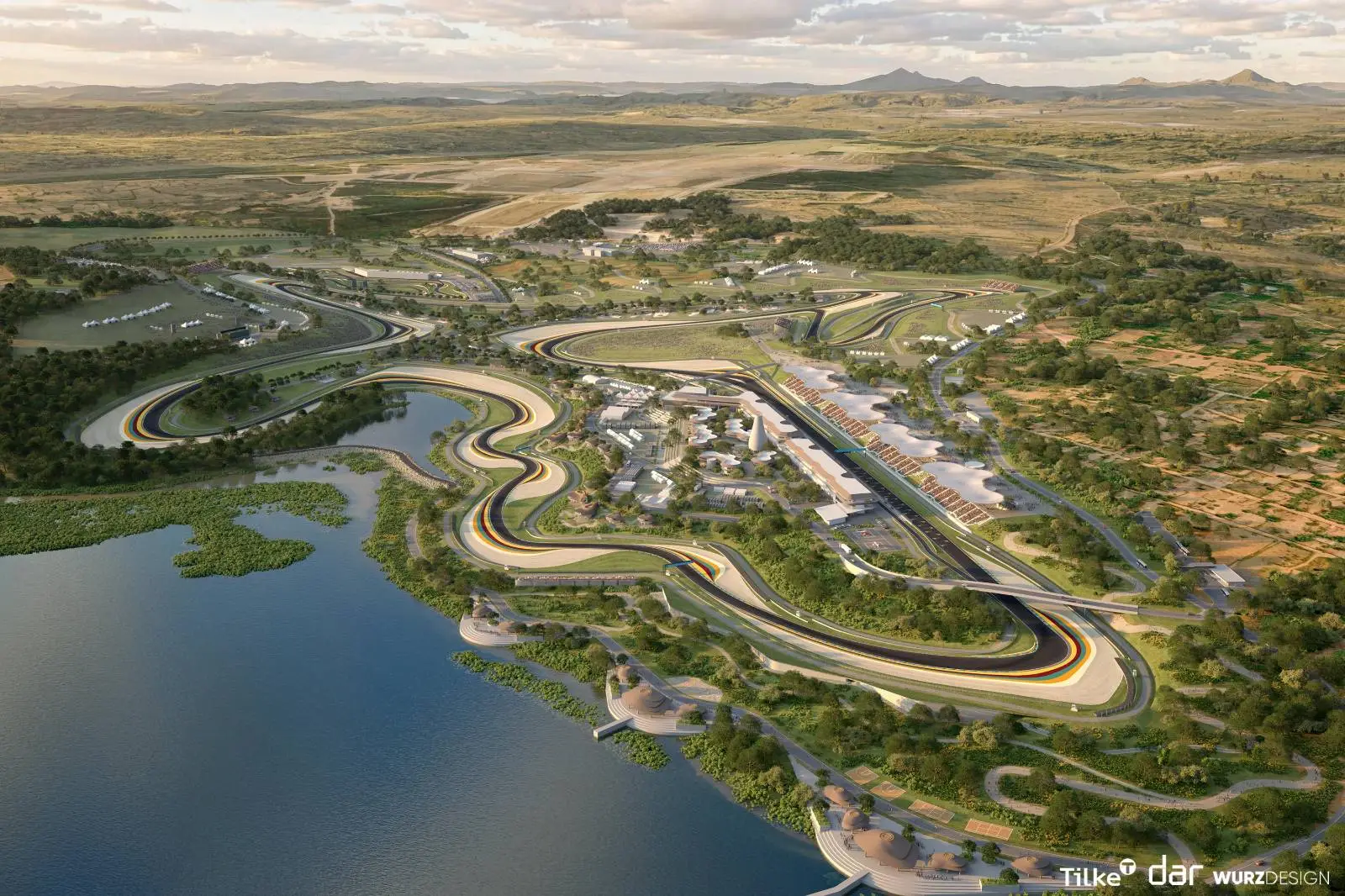
There are several changes compared to previous years. The Monaco Grand Prix is traditionally held in the final week of May, but that slot is now taken by the Canadian Grand Prix. As a result, Monaco will be held on June 7 in 2026. The Imola Grand Prix has been removed from the calendar and replaced by the Spanish Grand Prix, which will be held at the Madring in Madrid.
The Circuit de Barcelona-Catalunya remains on the calendar under the name of the region. The final Dutch Grand Prix at Circuit Zandvoort will take place immediately after the summer break, scheduled for the weekend of August 21–23, 2026.
F1 sprint races in 2026
As in previous years, six sprint races are scheduled in 2026. These will take place in China, Miami, Montreal, Silverstone, Zandvoort and Singapore.
F1 times 2026
The full schedule for all Grand Prix weekends can be found in the 2026 F1 calendar. This includes the dates and times for every race, as well as all qualifying sessions, free practice sessions, sprint shootouts and sprint races.
Formula 1 history
In 1950 it is Italian Giuseppe Farina who takes the first world title for Alfa Romeo, narrowly beating teammate Juan Manuel Fangio. The number two, however, will go down in the history books as one of the largest that Formula 1 has known to this day. After his defeat Fangio wins the world title in 1951, 1954, 1955, 1956 and 1957. A record that was not broken until 2003 (45 years later) by Michael Schumacher.
Juan Manuel Fangio
After Fangio, who wins for the Italian Alfa Romeo, Ferrari, Maserati and also for the German Mercedes, the British emerge. The British domination starts in 1959 when the Australian Jack Brabham takes the world title for the British team Cooper and it only ends in 2000, when Schumacher puts an end to the domination of the British teams. Between 1959 and 1999, six titles didn’t go to a British race team, while the other 35 titles did went to the British teams.
Formula 1 becomes a British affair
In addition to British teams such as Cooper, Brabham, BRM, Lotus, Tyrrell, McLaren and Williams, Formula 1 also grosses in British world champions. It's the time of Jackie Stewart, Graham Hill, Jim Clark and James Hunt where it's a prize for the English almost every year, but also under the leadership of Stirling Moss, the British are quickly throwing high praise for the Formula 1 championship.
Meanwhile, Formula 1 is also a inspiring environment for the technicians in the automotive industry. From engines in the front of the car, engineers in F1 quickly manage to get engines to the centre of the car. The chassis was first made of aluminium in 1962 and Lotus impresses with the ground-effect cars in the 1970s. These cars which are sucked to the track which gave them tremendous amounts of downforce which allowed them to go through the corners like a rocket.
Meanwhile, Formula 1 is also a inspiring environment for the technicians in the automotive industry. From engines in the front of the car, engineers in F1 quickly manage to get engines to the centre of the car. The chassis was first made of aluminium in 1962 and Lotus impresses with the ground-effect cars in the 1970s. These cars which are sucked to the track which gave them tremendous amounts of downforce which allowed them to go through the corners like a rocket.
The power of Bernie Ecclestone
Based on Bernie Ecclestone, Formula 1 is also growing financially. In 1978, Ecclestone took over as president of Formula 1 and made circuits pay more to organize a race. Participating or staying away was the motto of Ecclestone, who was very hard in negotiations with circuits and teams. Formula 1 is growing under Ecclestone into a multi-billion dollar business, as we know it today.
Meanwhile, a lot has changed on the track. Williams and McLaren are in the competition, but it's other nationalities that are running away with the driver's title. However, after Nelson Piquet, Niki Lauda and Keke Rosberg, a storm is blowing up that will go down in the books as the greatest rivalry of all time: Alain Prost versus Ayrton Senna.
Meanwhile, a lot has changed on the track. Williams and McLaren are in the competition, but it's other nationalities that are running away with the driver's title. However, after Nelson Piquet, Niki Lauda and Keke Rosberg, a storm is blowing up that will go down in the books as the greatest rivalry of all time: Alain Prost versus Ayrton Senna.
Senna versus Prost
Prost is the established name with two world titles in its pocket and Senna is the great talent and huge figurehead for the sport. Millions of fans all over the world watch the battles between the two, which ended mainly in 1989 and 1990. In the first edition Senna is disqualified after a disputable duel with Prost in which the Frenchman is held over by the French boss at the FIA and in 1990 the incident in which Senna deliberately crashes with Prost, so that he would become world champion.
When Prost signed for Williams in 1993, he had a clause included in his contract that his teammate could not be Senna. Williams has by far the best car and gives Prost his fourth and final title. Senna comes to Williams the following year but crashed in the fourth race during the Grand Prix of San Marino, which tragically resulted in his death.
The death of Senna and Roland Ratzenberger, who died the same weekend, marks a turning point in Formula 1. Formula 1 safety is finally taken more seriously and since the death of Senna and Ratzenberger, only Jules Bianchi was killed in a Formula 1 race in 2015.
When Prost signed for Williams in 1993, he had a clause included in his contract that his teammate could not be Senna. Williams has by far the best car and gives Prost his fourth and final title. Senna comes to Williams the following year but crashed in the fourth race during the Grand Prix of San Marino, which tragically resulted in his death.
The death of Senna and Roland Ratzenberger, who died the same weekend, marks a turning point in Formula 1. Formula 1 safety is finally taken more seriously and since the death of Senna and Ratzenberger, only Jules Bianchi was killed in a Formula 1 race in 2015.
The breakthrough of Michael Schumacher
In 1994, however, a great talent emerged: Michael Schumacher. The German will drive all the records from the history books. The German is far ahead of his time and is fitter and sharper than any driver ever. He first wins two titles at Benetton, then takes the decayed Ferrari to the top with a self-constituted management with Jean Todt and Ross Brawn.
Schumacher won five world titles at Ferrari between 2000 and 2004. The Formula 1 team thus takes most of the titles in a row, but above all Schumacher is the first with seven titles to set the record for Juan Manuel Fangio. Ferrari's supremacy continues, until a new talent emerges in 2005. Fernando Alonso wins the title twice with the old team of Schumacher (Renault that used to be Benetton), after which Schumacher retires at the end of 2006.
Schumacher won five world titles at Ferrari between 2000 and 2004. The Formula 1 team thus takes most of the titles in a row, but above all Schumacher is the first with seven titles to set the record for Juan Manuel Fangio. Ferrari's supremacy continues, until a new talent emerges in 2005. Fernando Alonso wins the title twice with the old team of Schumacher (Renault that used to be Benetton), after which Schumacher retires at the end of 2006.
Hamilton on the hunt for Schumacher's record
After Schumacher, however, it is not Alonso who is there to take the throne, until his teammate debuted in 2007: Lewis Hamilton. The Brit first wins a title with McLaren, then six titles with Mercedes. Hamilton tried to beat Schumacher, but lost his eighth World Championship to Max Verstappen on the final lap of the final race in the 2021 season. This marked a changing of the guard. Verstappen is now a three-time World Champion.
USA Grand Prix
Overview
... ...
Practice 1
...
Practice 2
...
... ...
Practice 3
...
Qualification
...
... ...
Race
...
... ...
Practice 1
...
Practice 2
...
... ...
Practice 3
...
Qualification
...
... ...
Race
...
Times are in your local timezone
Popular on GPBlog
1
Lambiase comes up with genius solution to Verstappen's radio fails in Singapore GP
4305 times read
2
Norris appears to mock fellow F1 driver in Singapore GP party footage
2624 times read
3
F1 Today | Lawson disagrees with Hamilton and Verstappen as Vasseur loses patience
2224 times read
4
Alonso fumes with Verstappen pit stop in Singapore GP radio message
1537 times read
Loading