Why tyre safety concerns have prompted special restrictions in Qatar
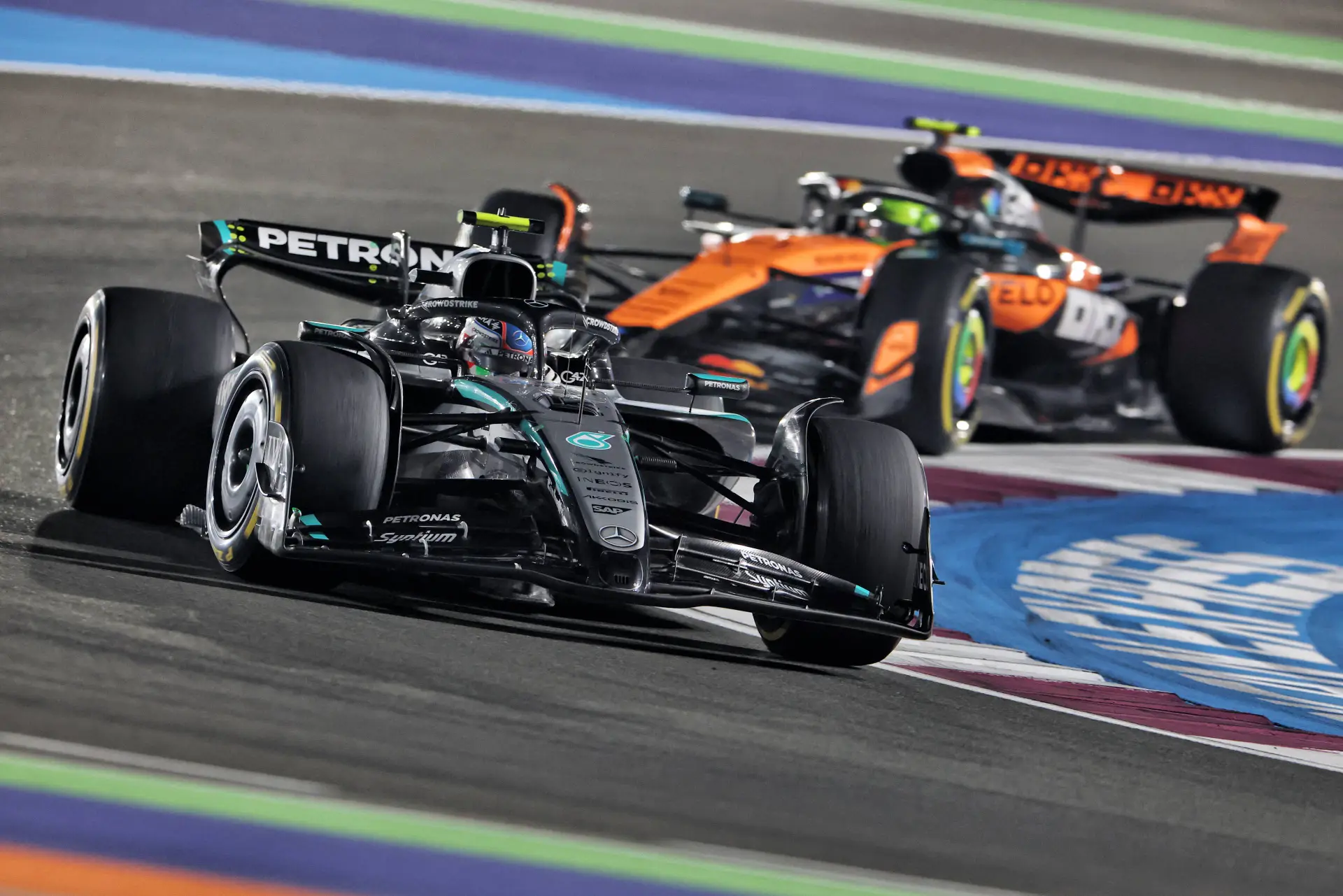
Photo: Race Pictures

Tobia is a Formula 1 journalist at GPblog with experience at international circuits. Since 2022, he has covered Grands Prix across Europe, delivering reliable coverage and insights from the paddock.
Formula 1 heads to Qatar this weekend for the penultimate round of the 2026 season, with tyre management and race strategy set to play a crucial role in determining the outcome of Sunday's Grand Prix. As the drivers prepare to hit the track in Lusail today, here's a reminder of the special tyre restrictions in place this weekend and why teams will be forced to adopt a two-stop strategy.
The penultimate round of the 2026 season will see teams contend with one of the most demanding circuits on the calendar for tyre management, owing to its succession of high-speed corners and the considerable lateral loads exerted on the tyres.
However, unlike at most other Grands Prix, teams will have limited freedom when it comes to determining their race strategies on Sunday, with specific restrictions introduced on safety grounds.
Why has Pirelli imposed a 27-lap tyre limit in Qatar?
In agreement with the FIA and Formula 1, Pirelli has imposed a maximum mileage of 27 laps on each set of tyres throughout the Qatar Grand Prix weekend. With Sunday's race scheduled to take place over 57 laps, every driver completing the full race distance will therefore need to make at least two pit stops.
ADVERTISEMENT
The decision stems from the unique characteristics of the Lusail circuit, where the succession of high-speed corners subjects the tyres to considerable lateral loads for much of the lap. High track temperatures further contribute to excessive tyre wear, particularly on the front-left tyre.
Tyre safety has been a recurring concern in Qatar, dating back to the 2023 edition of the Grand Prix, when repeated contact with the circuit's pyramid-shaped kerbs caused damage to the internal structure of the tyres, prompting Pirelli to impose an 18-lap limit.

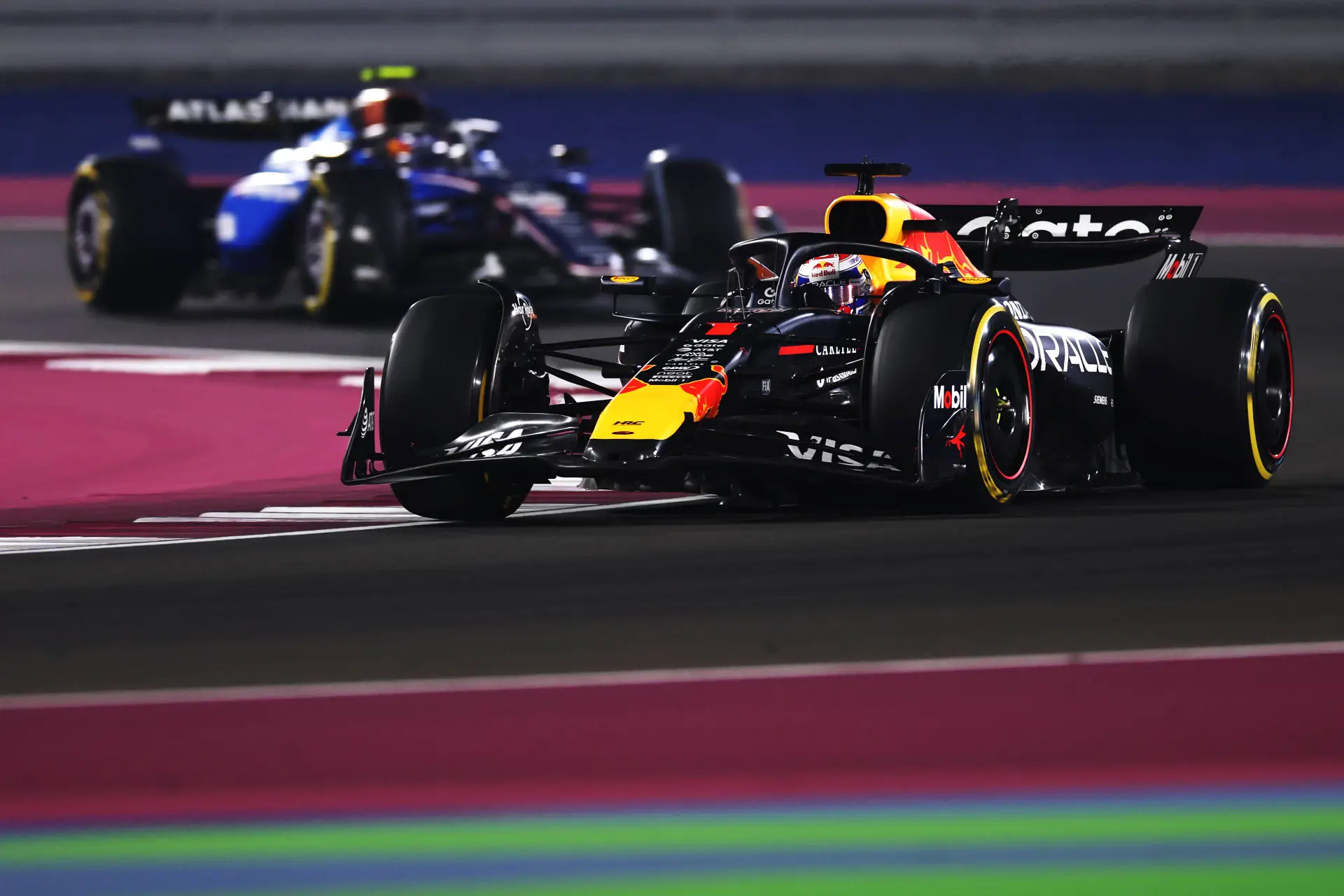
Photo: Race Pictures
Although subsequent modifications to the kerbs addressed that particular issue, excessive tyre wear and structural fatigue remain a concern for Pirelli, hence the decision to retain a mileage restriction for the second consecutive season.
One of Pirelli's main concerns is that the tyres can continue to deliver relatively consistent lap times despite experiencing considerable wear, potentially encouraging teams to extend their stints beyond safe operating limits.
ADVERTISEMENT
The maximum permitted mileage has nevertheless been increased from 25 laps in 2025 to 27 this year, owing to the reinforced construction of Pirelli's 2026 tyres and the lower aerodynamic loads generated by the current generation of F1 cars.
How will the tyre restrictions work throughout the Qatar GP weekend?
The 27-lap limit applies cumulatively across the entire weekend rather than exclusively to Sunday's Grand Prix. As such, any mileage accumulated on a particular set of tyres during free practice or qualifying will reduce the number of laps available on that set during the race.
Laps completed behind the Safety Car or under Virtual Safety Car conditions will also count towards the total, while reconnaissance laps, formation laps and laps completed after the chequered flag will be excluded.
ADVERTISEMENT
Unlike last year, however, Qatar will not host a Sprint this weekend, giving teams greater flexibility in managing their tyre allocation throughout the three free practice sessions. Pirelli has also selected the three hardest compounds in its range, with the C1, C2 and C3 nominated as the hard, medium and soft tyres respectively.
Why Safety Car timing could prove decisive in Qatar
Although the restrictions eliminate the possibility of a conventional one-stop strategy, the timing of the two mandatory tyre changes could still have a significant impact on the outcome of Sunday's Grand Prix.
The earliest opportunity for a driver to make their first pit stop without committing to a three-stop strategy would theoretically come at the end of lap three, provided they have two unused sets of tyres available to complete the remaining 54 laps.
Last year's Qatar Grand Prix provided a perfect example of how costly a strategic miscalculation can be under these circumstances. McLaren opted not to pit either of its drivers when the Safety Car was deployed on lap seven, a decision that ultimately benefited Max Verstappen, who went on to secure victory.
ADVERTISEMENT

Don’t miss GPblog in Google
Mark us as a preferred source and our articles will appear more often at the top of Top Stories.
Add as a preferred / source on Google