F1
Formula 1 is the highest class in motorsport and is widely regarded as the pinnacle of single-seater racing. The competition dates back to 1950 and has officially been recognised as the FIA Formula 1 World Championship since 1981. Lando Norris is the current drivers’ world champion, while McLaren holds the constructors’ title.
F1 regulations 2026
The technical regulations will be overhauled in 2026, with major changes to the power units. Drivers will continue to use 1.6-litre turbo-hybrid V6 engines. In 2025, these produced between 550 and 560 kW (around 750 to 765 bhp), but this will drop to 400 kW (545 bhp).
At the same time, electrical power will play a bigger role. The MGU-K will increase from 120 kW (163 bhp) to 350 kW (477 bhp). Under braking, the new engines will recover twice as much energy, up to 8.5 megajoules per lap.
The chassis will also change. The cars will become smaller, with 15 to 30 percent less downforce and 40 percent less drag. DRS will be removed and replaced by active aerodynamics, allowing drivers to adjust front and rear wings across the lap.
All teams will effectively start from scratch. It will only become clear which teams have done the best job at the season opener in Australia. The question is whether Red Bull Racing and Max Verstappen can compete with Ferrari, Mercedes, Honda and Audi power units, or whether another team will take the title.
F1 calendar 2026
In 2026, there will once again be a record 24 races on the Formula 1 calendar. The season begins with the annual winter testing programme. From January 26 to 30, testing takes place behind closed doors in Barcelona. This is followed by sessions in Bahrain from February 11 to 13 and February 18 to 20.
As in 2025, the season starts with the Australian Grand Prix. Prior to that, the Bahrain Grand Prix had been the season opener since 2021, but Melbourne reclaimed that position last year.
The Dutch Grand Prix will appear on the calendar for the final time in 2026. The race at Circuit Zandvoort will be the first event after the summer break and will take place on Sunday, August 23, 2026.
F1 points system 2026
The Formula 1 calendar has expanded significantly over the years and, under Liberty Media, that trend is expected to continue. The championship consists of ten teams and twenty drivers.
The points system has also evolved. Where originally only the top six drivers scored points, today the top ten receive points (25, 18, 15, 12, 10, 8, 6, 4, 2, 1). Until the end of the 2024 season, the driver with the fastest lap that finished inside the top 10 also earned an additional points. In recent years, it has been also discussed to explained the points-paying positions to P12, but that is yet to materialize.
F1 sprint races in 2026
Of the 24 races on the calendar, six weekends will once again feature a sprint race. These will take place in China, Miami, Canada, Silverstone, the Netherlands and Singapore.
F1 times 2026
The full schedule for each Grand Prix weekend can be found in the 2026 F1 calendar. This includes the dates and times for every race, as well as qualifying sessions, free practice sessions, sprint shootouts and sprint races.
F1 in 2026
Max Verstappen and Red Bull Racing did not start the 2026 season as the main favourites. Many expected Mercedes to come out of the winter strongest, with Toto Wolff attempting to shift attention towards Red Bull during testing.
In Australia, it quickly became clear that the German team had an advantage. Verstappen crashed on his first lap in Q1 due to a problem with his car. In the race, he recovered to finish P6. Mercedes dominated, securing a one-two finish in both qualifying and the race.
The 2026 Chinese Grand Prix in Shanghai was also dominated by Mercedes. Kimi Antonelli took pole position and controlled the race to claim his first victory, becoming one of the youngest winners in Formula 1 history. George Russell completed a one-two for Mercedes, while Lewis Hamilton finished third for Ferrari. The race featured strategic variation and midfield battles, partly influenced by safety cars and the new technical regulations. Verstappen retired with issues on the RB22.
The Japanese Grand Prix at Suzuka was again won by Andrea Kimi Antonelli, who took the lead in the championship. Oscar Piastri and Charles Leclerc completed the podium. The race was overshadowed by a heavy crash involving Oliver Bearman and discussions about the new regulations, which created significant speed differences. Verstappen finished eighth.
After the Bahrain and Saudi Arabian Grands Prix were cancelled, the season continued with the Miami Grand Prix. McLaren’s updates improved the Woking-based team’s performance, as Norris and Piastri scored a one-two in the Sprint. On Sunday, Kimi Antonelli took victory, while George Russell finished behind the two McLarens.
At the Canadian Grand Prix, Antonelli and Russell made contact for the first time during Saturday’s Sprint. The Italian driver was furious on team radio and demanded a penalty for his teammate. In the end, the Briton won the Sprint, while Antonelli finished third. The Mercedes drivers then had another hard-fought battle on Sunday, and once again made contact. However, Russell’s car failure completely changed the script, as Antonelli went on to win ahead of Hamilton and Verstappen.
History of F1
After World War II, motorsport transformed into the organized championship that we now know as Formula 1, where races are held under specific regulations. This transformation culminated in 1950 with the establishment of the first world championship, where Giuseppe Farina (Italy) won the inaugural title for Alfa Romeo, narrowly beating his teammate Juan Manuel Fangio. Fangio, who later drove for teams like Ferrari, Maserati, and Mercedes, dominated the 1950s with five world titles, setting a standard that wasn’t surpassed until decades later by Michael Schumacher.
From the late 1950s to the year 2000, British teams dominated Formula 1. It all started when Jack Brabham (Australia) won the world title for the British team Cooper in 1959. Teams like BRM, Lotus, McLaren, and Williams continued this dominance, with British drivers such as Jackie Stewart, Graham Hill, Jim Clark, and James Hunt regularly collecting world titles. This trend continued until Michael Schumacher broke the dominance of British teams with Ferrari.
F1 Ownership - From Bernie Ecclestone to Liberty Media
Under Bernie Ecclestone, who took over in 1978, Formula 1 underwent a financial transformation. He introduced higher costs for circuits and strict negotiations, turning the sport into a multi-billion-dollar business. Williams and McLaren dominated the track, while rivalries like the one between Alain Prost and Ayrton Senna created significant drama. In 2016, Liberty Media, a US-based company, took over with Chase Carey and Ross Brawn at the helm. They introduced new rules and a budget cap to modernize the sport.
The Rivalry Between Senna and Prost
The rivalry between Alain Prost and Ayrton Senna became one of the most iconic in F1 history, reaching its peak with their controversial collisions in 1989 and 1990. After their time together at McLaren, the rivalry continued, with Prost winning his fourth title with Williams in 1993 and Senna tragically dying during the 1994 San Marino Grand Prix while driving for Williams. Their fierce battles forever changed the dynamics of Formula 1 and raised awareness about safety.
The Michael Schumacher Era
The rise of Michael Schumacher in 1994 marked the beginning of a new era. He broke record after record, first with Benetton and later with Ferrari, where he formed a successful partnership with Jean Todt and Ross Brawn. Between 2000 and 2004, Schumacher dominated with five consecutive titles at Ferrari, ultimately breaking Fangio’s record with seven world titles. His time at Ferrari set new standards for the sport until Fernando Alonso broke the dominance in 2005 and 2006 by winning titles with Renault. Schumacher’s retirement in 2006 marked the end of an era.
Lewis Hamilton’s Pursuit of Schumacher’s Record
After Schumacher, it wasn’t Alonso but Lewis Hamilton, his teammate in 2007, who would become the successor. The British driver won his first title with McLaren, then went on to win six titles with Mercedes. Hamilton even came very close to his eighth world title. In 2021, during the Abu Dhabi Grand Prix, Hamilton led the race but ultimately lost to Max Verstappen. The Dutchman overtook him on fresh tires to claim his first world title.
Verstappen v Hamilton in 2021
The 2021 Formula 1 season culminated in a dramatic battle between Max Verstappen and Lewis Hamilton at the Abu Dhabi Grand Prix, where both drivers arrived with equal points. Verstappen, consistently strong from the start of the season, and Hamilton, the former dominant force with Mercedes, fought not only on the track but also sparked tensions between team bosses Christian Horner (Red Bull Racing) and Toto Wolff (Mercedes). The race reached a climax when Verstappen crashed after a clash with Hamilton during the British Grand Prix, leaving Verstappen in the hospital while Hamilton went on to win despite a time penalty. In Abu Dhabi, Verstappen lost his lead to Hamilton at the start but regained it due to a late race crash involving Nicholas Latifi. This triggered a safety car situation that allowed Verstappen to switch to soft tires while Hamilton stayed on hard tires. Race director Michael Masi's decision to allow one more lap of racing enabled Verstappen to overtake Hamilton and claim his first world title, despite protests from Mercedes, leading to Masi's eventual replacement by the FIA.
Follow F1 on GPblog
Throughout the entire Formula 1 weekend, the latest news can be found on GPblog. As usual, the most important developments are reported first, with additional coverage during race weekends including live blogs for every session, race reports, post-race reactions and analysis.
Formula 1 in 2025
The 2025 Formula 1 season started unusually difficult for Max Verstappen and Red Bull Racing. The RB21 struggled with balance issues in the opening races, meaning Red Bull was no longer the benchmark.
McLaren capitalised on this, with Lando Norris and Oscar Piastri consistently outperforming the competition early in the season. Verstappen delivered solid results but saw the McLaren drivers take control of the championship standings.
After the first half of the season, Red Bull turned things around. A series of updates addressed key weaknesses, allowing Verstappen to become more competitive again. This led to multiple wins and a strong comeback in the title fight.
In the final phase of the season, consistency proved decisive. Verstappen reduced the gap with strong performances, while Norris managed to hold on under pressure.
Azerbaijan Grand Prix
Overview
Thursday 24.09.26
Practice 1
08:30 AM
Practice 2
12:00 PM
Friday 25.09.26
Practice 3
08:30 AM
Qualification
12:00 PM
Saturday 26.09.26
Race
11:00 AM
Thursday 24.09.26
Practice 1
Thu 08:30 AM
Practice 2
Thu 12:00 PM
Friday 25.09.26
Practice 3
Fri 08:30 AM
Qualification
Fri 12:00 PM
Saturday 26.09.26
Race
Sat 11:00 AM
Times are in your local timezone
Popular on GPBlog
1
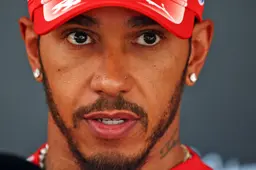
Hamilton reportedly pushes Ferrari to replace key trackside figures as Vasseur relationship cools
9368 times read
2
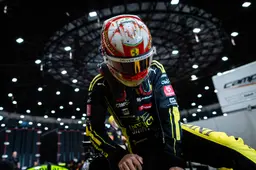
Haas has made a difficult choice: this driver is set to replace Ocon
1410 times read
3
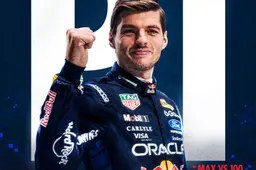
Verstappen takes 35 minutes to complete epic kart challenge
1007 times read
4
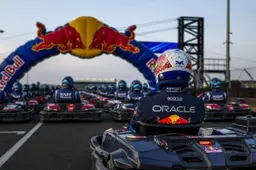
LIVE | Verstappen takes 35 minutes to overtake the 100 drivers in epic karting challenge
964 times read
Loading